

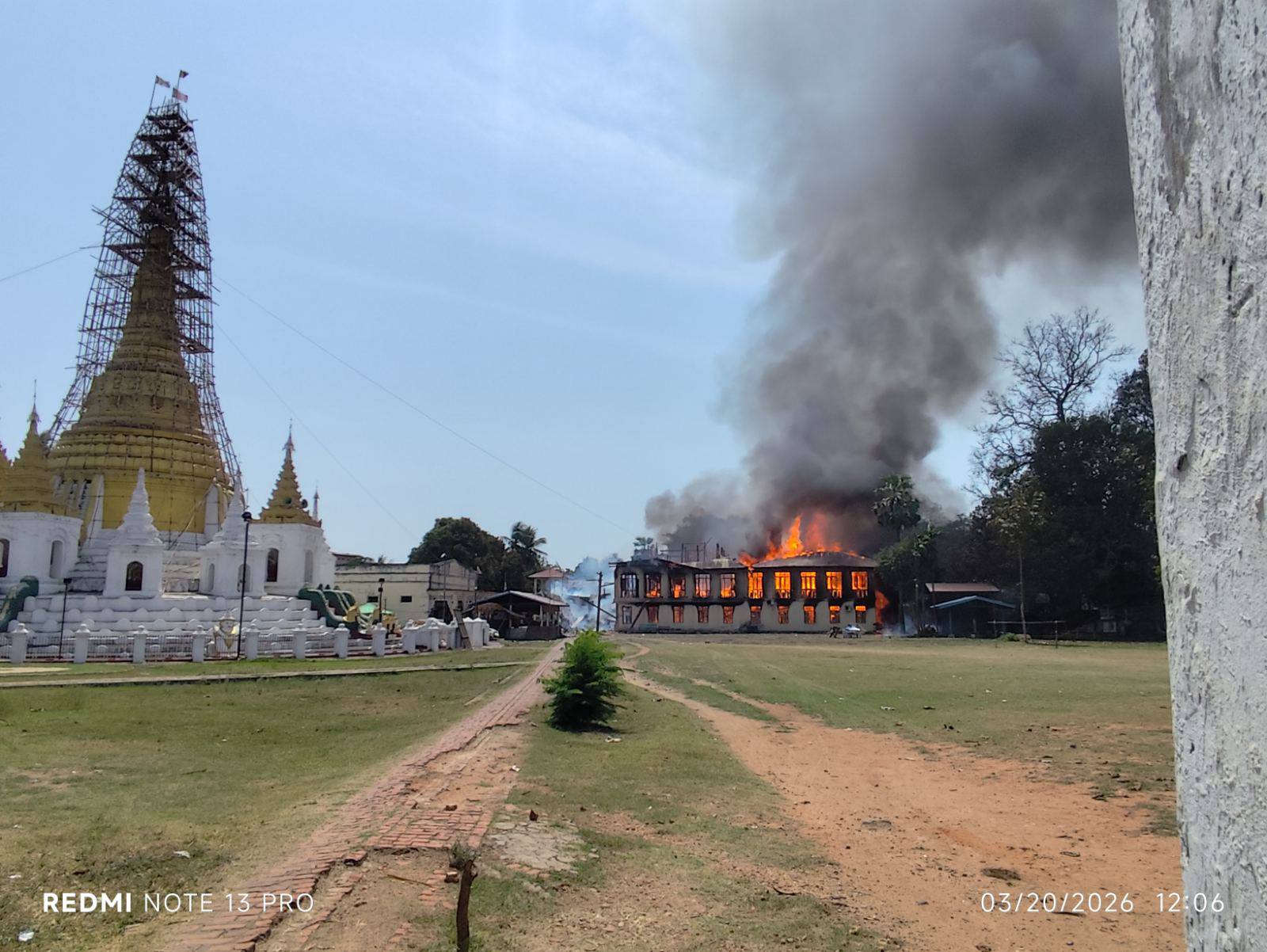
Like many countries, Myanmar faces concerns over fuel and jet fuel supplies due to the war in the Middle East, yet the junta continues to carry out airstrikes.
On the morning of March 20, a junta fighter jet bombed a monastery sheltering internally displaced people (IDPs) in Katha Township, Sagaing Region, killing and injuring dozens of monks and displaced civilians.
Later that afternoon, an airstrike struck Nabet Village in Myaung Township, Sagaing Region, killing a one-month-old infant and a woman and injuring 10 civilians.
Since early March, the junta has introduced measures to cope with the fuel crisis, including limiting fuel sales and requiring vehicles to operate on alternating days based on the odd or even digits of their license plates. These restrictions make daily life more difficult for the population and negatively affect the socio-economic situation.
Myanmar National Airlines (MNA) and Myanmar Airways International (MAI) announced on March 19 that they would reduce passengers’ extra baggage allowances to conserve fuel. Airlines also began canceling many domestic flights and refunding fares from March 20, and have suspended the sale of new tickets.
Amid severe jet fuel shortages, the junta continues to use fighter jets to carry out bombing raids on areas controlled by resistance forces and ethnic armed organizations (EAOs).
Two weeks ago, 28 civilians were killed in a series of airstrikes, artillery shelling, and drone bombings carried out by the junta in Yaetwinkone, Khayukone, and Kyaungkone villages in Nyaunglebin Township, Bago Region.
On March 8, the junta bombed a detention center run by the Arakan Army (AA) in Ann Township, Arakan (Rakhine) State, killing 116 prisoners of war (PoWs) and injuring 32, according to the AA.
Iran delivered about 175,000 tons of jet fuel to the Myanmar military between October 2024 and December 2025, according to Reuters.
Justice for Myanmar also reported that data from the Myanmar Ports Authority shows jet fuel imports into Myanmar nearly doubled, from 64,562 metric tons in 2024 to 106,604 metric tons in 2025.
Despite high transportation and logistical costs, the junta is currently stepping up efforts to increase jet fuel and other fuel purchases from its ally, Russia.