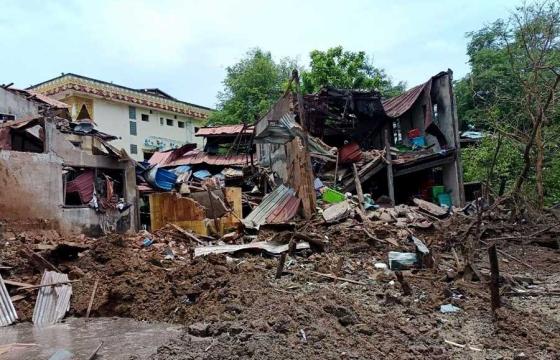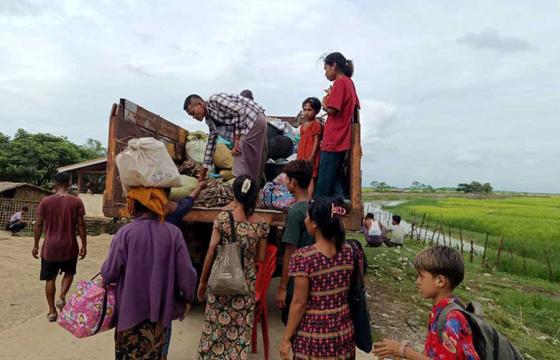
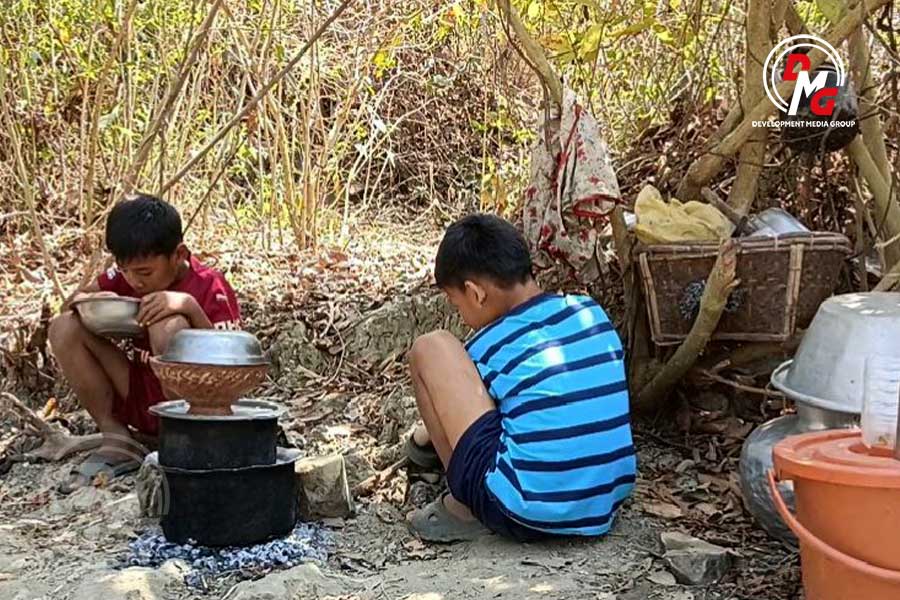
Nearly two years after fighting resumed in Arakan (Rakhine) State in November 2023, residents continue to grapple with severe poverty and hunger as the conflict takes a heavy toll on livelihoods.
Since the resurgence of fierce clashes, the junta has enforced a strict blockade on all trade routes from mainland Myanmar into Arakan State, citing the military situation as justification. The restrictions have severely disrupted food supplies and basic necessities, leaving local communities struggling to survive.
“We’re really struggling to make ends meet. We can’t find any jobs. Every time we go out looking for a job, we come back empty-handed and feeling down. We’re depressed. We don’t have enough food, we can’t wear what we want, and we can’t eat what we wish. Life is just really hard,” said Daw Yi Mar Win, a displaced woman from Kyauktaw Township.
Residents face rising prices, job shortages, and a growing imbalance between incomes and daily expenses, leading to heightened stress and food insecurity.
To meet basic needs, some merchants are importing goods from India, Bangladesh, and mainland Myanmar, navigating difficult and hazardous routes. Traders said these alternatives are long, dangerous, and costly, driving up prices for essential items.
Before the renewed fighting in November 2023, prices in Arakan State were relatively stable: low-grade rice sold for 30,000 MMK per bag, one litre of cooking oil cost 4,000 MMK, one viss (approximately 1.6 kilograms) of onion was 2,000 MMK, and one viss of dried chili was 9,000 MMK, according to DMG records.
Housewives reported that a family of four could cover daily meals including meat, fish, and other groceries with around 7,000 MMK.
Today, the same items cost significantly more: a bag of low-grade rice exceeds 70,000 MMK, one litre of cooking oil costs over 14,000 MMK, one viss of onion is more than 10,000 MMK, and one viss of dried chili tops 25,000 MMK. Prices for meat and fish have surged roughly fivefold since before the conflict.
“I can’t do anything to support my family. I can’t even afford to take care of my own health. Sometimes I just feel so depressed that I think about ending my life,” said Daw Shwe Thein Hla from Mrauk-U Township.
The consequences of soaring prices and food insecurity are severe, resulting in malnutrition, growing debt, forced reliance on begging, early school dropouts, depression, and, in extreme cases, suicide.
On June 29, a family of five in Mingan Ward, Sittwe, the capital of Arakan State, took their own lives, reportedly unable to endure the hunger any longer. In May, five members of a Muslim family living in a refugee camp in Sittwe also died by suicide after drinking poison, driven by the same desperation caused by food shortages.
The United Nations’ World Food Programme (WFP) reported in August that 57 percent of households in central Arakan State are experiencing food insecurity. Conditions in northern Arakan are expected to be even more severe due to the junta’s stringent blockade.
Despite repeated warnings from the United Nations (UN) about the crisis, no visible improvements have been seen, and locals said that aid remains insufficient.
“The UN always issues statements saying it’s worried or concerned about certain issues. It holds closed-door meetings. But here in Arakan State, people have been going through a long crisis, and no real help has ever come,” said a young man from the region.
Calls are growing for the UN to take concrete measures, including recognizing the blockade of aid as a human rights violation and ensuring that assistance reaches those most in need.