

The junta-aligned Union Solidarity and Development Party (USDP) won a majority of seats in the junta-controlled three-phase election, which took nearly a month to complete, but news editors criticized the process as unfair and said the results were illegitimate.
In voting held across separate regions on December 28, January 11, and January 25, the USDP achieved a landslide victory, capturing 72 percent of all seats, according to the Data for Myanmar (D4M) report released on February 8.
The USDP won 739 of the 1,025 seats across the three Myanmar Hluttaws in the election, according to the D4M.
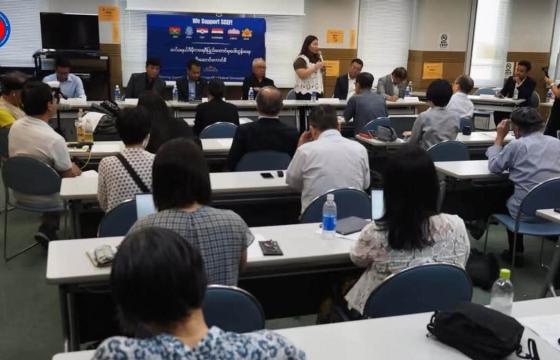
“The USDP won in many areas by using early votes that were collected before the election, and in some places, people were pressured or intimidated into voting,” said U Ko Ko Zaw, the editor-in-chief of Than Lwin Times.
The junta said the election had a strong and promising turnout, but in reality, the situation on the ground was riddled with problems.
“The junta tried to paint a picture that people were eagerly taking part in the election—but that’s not true. In reality, most went to the polling stations reluctantly, weighing the possible risks. One voter we spoke to even said there were more people than he expected, but that didn’t change the fear everyone felt,” said Naw Dwe Eh Khu, News Editor of Kantarawaddy Times.
“People voted out of fear, thinking that if they hurried, they could get it over with and feel a bit safer. The resistance had also called on people not to vote, but many still rushed through the process, afraid that artillery shells could strike the polling station at any time,” she added.
More than 110 bombings and shootings occurred during the election, with polling stations and election offices frequently targeted.
People also staged a silent strike to protest the election and held marches in several townships.
Political analysts also noted that the Chinese government exerted significant behind-the-scenes pressure and influence to push the junta to hold the election.
Critics also said that the Chinese government pressured the junta to hold the election in order to resume projects tied to its massive Belt and Road Initiative (BRI) and the long-suspended Myitsone Dam project in northern Myanmar.
“The junta’s election is basically a Made-in-China affair. There are also moves to restart the Myitsone Dam project in Kachin State. It’s pretty clear all of this is just to please China—this is literally a Made-in-China election,” said San Htoi, a spokesperson for the Kachin Women’s Association Thailand (KWAT).
The junta heavily promoted the election as legitimate and successful, but on the ground it faced security challenges, public opposition, and international rejection, raising serious questions about the vote’s legitimacy, the D4M report also noted.