

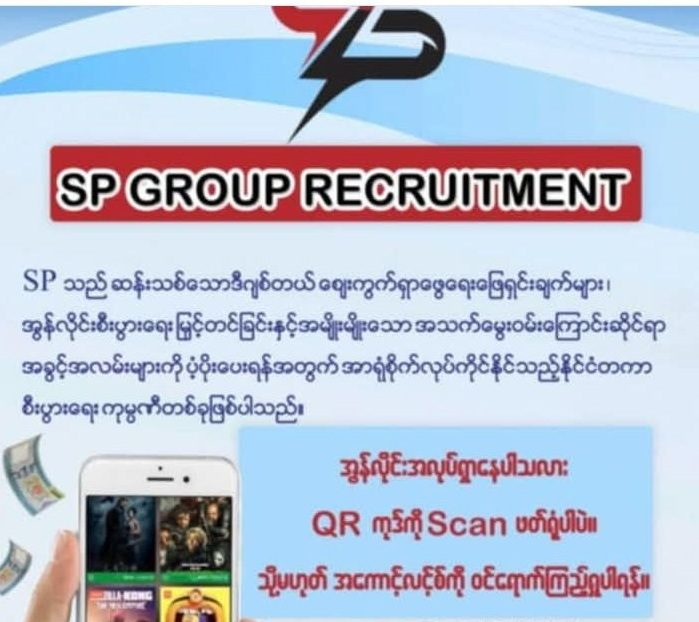
Telecom scam operations—using tactics such as promising easy, steady income for simply watching online advertisements—are causing financial losses among residents in Dooplaya District under the Karen National Union (KNU).
Locals from Htihuthan, Winka, and Hpakya villages in Kyondoe Township, as well as several communities in Notakaw Township, are suffering losses ranging from lakhs to hundreds of millions of MMK. Some have been forced to sell farms and other assets to repay debts linked to telecom scams.
“A lot of people in our village have been affected by Zhapian scams. One of my neighbors lost around 30 million MMK, and now she’s had to put her farm up for sale to pay off her debts,” said a Htihuthan villager. Zhapian is a local term used to refer to telecom scam businesses.
The fraud typically begins with an invitation to register on a website called Spfilm.vip, where users are asked to watch short videos in exchange for the promise of regular income. Participants are required to invest money upfront. According to victims, the scammers initially pay small returns to build trust and encourage further investment, but once the amounts grow larger, they suddenly shut down the accounts and take all deposited funds.
Telecom scammers are also encouraging participants to recruit others, offering a reward of 50,000 MMK for each new member they bring in.
Those who create an account and deposit money are required to watch 20 video ads each day, ranging from 6 seconds to 5 minutes in length, in exchange for a promised daily income of 10,000 to 20,000 MMK. Remittances are tied to bank accounts, while those without accounts rely on popular mobile payment apps to transfer money.
KNU Legal Affairs Head Padoh Naw Lwe Htoo Say said the organization is aware of telecom scam cases affecting residents in Dooplaya District, though the issue has not yet reached the central executive committee. She stressed the need for effective public education efforts.
“This is a serious problem, and the authorities need to step up efforts to properly educate the public,” she said.
Under Kathoolei laws in KNU-controlled areas, deceiving or manipulating others for personal gain is considered a crime.
According to locals, some villages are also seeing scams operating under the guise of unsecured money-lending businesses.