

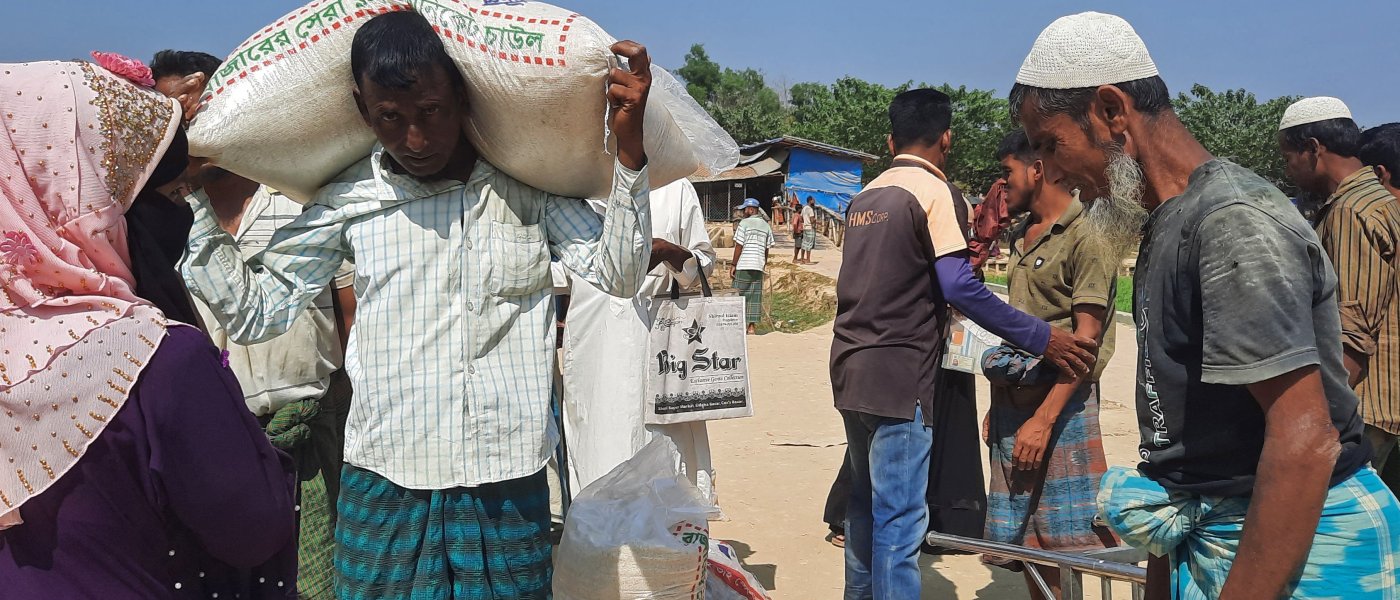
Nearly nine years after the mass displacement of Rohingya civilians from Myanmar, Bangladesh is intensifying calls for international intervention amid what analysts increasingly describe as a “systemic failure” of global protection mechanisms. With approximately 1.2 million Rohingya confined to camps in Cox’s Bazar and Bhasan Char, the crisis now sits at the intersection of protracted statelessness, atrocity crimes accountability gaps, and geopolitical paralysis.
From Ethnic Cleansing to Protracted Statelessness
The 2017 military operations by Myanmar’s armed forces—widely characterized by UN investigators as bearing the hallmarks of genocide—triggered the largest exodus of Rohingya in modern history. Today, the absence of citizenship, legal identity, and enforceable rights continues to define the Rohingya condition.
Legal experts point to obligations under the Convention on the Prevention and Punishment of the Crime of Genocide, which requires not only punishment but also prevention. However, despite extensive documentation of alleged genocidal acts, enforcement remains constrained by geopolitical divisions within the United Nations Security Council.
Accountability Architecture: Progress Without Enforcement
International Court of Justice (ICJ)
The case brought by The Gambia against Myanmar at the International Court of Justice represents the most significant state-led effort to establish responsibility for genocide. Provisional measures ordered by the Court remain legally binding, yet compliance monitoring mechanisms are limited.
International Criminal Court (ICC)
The International Criminal Court has authorized an investigation into crimes related to forced deportation and persecution, given jurisdictional links to Bangladesh. However, the Court’s reach is structurally constrained without custody of suspects.
UN Investigative Mechanisms
The Independent Investigative Mechanism for Myanmar continues to collect and preserve evidence for future prosecutions. Yet, absent a political breakthrough, pathways to trials remain uncertain.
Assessment: A fragmented accountability framework—active but unenforced—has contributed to what policy analysts describe as “justice deferral,” reinforcing cycles of impunity.
Current Crisis Dynamics (2025–2026)
Humanitarian Contraction
The 2025–2026 Joint Response Plan faces critical underfunding, forcing reductions in food assistance to subsistence levels. This contraction risks breaching minimum humanitarian standards and may engage obligations under international human rights law related to the right to food and dignity.
Security Degradation
Escalating violence within camps—driven by armed groups, trafficking networks, and governance vacuums—has transformed sections of the settlements into fragile, semi-lawless zones, raising concerns of transnational security spillover.
Renewed Displacement from Rakhine
Ongoing armed conflict involving Myanmar’s military and the Arakan Army continues to generate new displacement flows. Reports of fresh arrivals since 2024 suggest that conditions for safe return are not only absent—but deteriorating.
Bangladesh’s Strategic Position
Bangladesh’s interim leadership under Muhammad Yunus has sharpened its diplomatic posture, framing the crisis as:
A global protection failure rather than a bilateral issue
An unsustainable hosting burden with socio-economic and environmental costs
A test case for international legal credibility
Dhaka continues to emphasize three core demands:
Enforceable Conditions for Repatriation
Return must be anchored in citizenship, security guarantees, and international monitoring frameworks
2. Coercive Diplomacy Mechanisms
Including targeted sanctions and coordinated pressure on conflict actors in Rakhine State.
3. Expanded Responsibility-Sharing
Through increased funding and scaled third-country resettlement pathways.
Repatriation: Legally Defined, Practically Absent
Under international refugee law, repatriation must be voluntary, safe, dignified, and sustainable. Current conditions in Myanmar fail to meet these thresholds.
Refugee testimonies consistently cite three non-negotiable conditions:
Restoration of citizenship
Protection from persecution
Internationally guaranteed rights frameworks
Absent these, repatriation efforts risk violating the principle of non-refoulement, a cornerstone of international protection norms.
Geopolitical Deadlock and Strategic Risks
The Rohingya crisis has become embedded in broader regional and global dynamics:
ASEAN’s non-interference doctrine limits regional enforcement capacity
Great power competition dilutes unified action at the UN level
Aid fatigue threatens long-term humanitarian sustainability
Forward Risk Assessment:
Entrenchment of a permanent refugee underclass
Expansion of non-state armed influence in camps
Increased irregular migration and trafficking flows across the Bay of Bengal
Conclusion: A System Under Strain
The Rohingya crisis is no longer solely a humanitarian emergency—it is a stress test of the international legal order.
Without coordinated enforcement of accountability mechanisms and a credible political solution in Myanmar, the current trajectory points toward institutionalized statelessness and normalized impunity.
For Bangladesh, the warning is clear:
What began as a humanitarian response risks evolving into a permanent geopolitical liability—with consequences extending far beyond its borders.