
Bangladesh has strongly condemned Myanmar’s legal arguments at the International Court of Justice (ICJ), accusing Naypyidaw of deliberately misrepresenting the Rohingya people in an attempt to justify past atrocities and evade accountability for genocide.
In an official statement issued by the Ministry of Foreign Affairs in Dhaka, Bangladesh criticised Myanmar’s continued use of the term “Bengalis” to describe the Rohingya during the ongoing ICJ proceedings. The ministry said the terminology was intended to portray the Rohingya as illegal immigrants and security threats, rather than as an indigenous ethnic community of Myanmar.
Bangladesh further accused Myanmar of attempting to frame the military operations carried out in Rakhine State between 2016 and 2017 as legitimate counterterrorism actions, despite overwhelming evidence that the campaigns amounted to systematic ethnic cleansing and mass atrocities.
The statement stressed that denying the Rohingya their right to self-identification constitutes a fundamental assault on the group’s existence, aimed at expelling them from their ancestral homeland in Rakhine State and rendering them stateless.
According to the Foreign Ministry, the Rohingya have deep historical roots in the Arakan region dating back to at least 1785, with their presence documented in historical records and colonial-era population data long before the establishment of modern national borders.
Bangladesh noted that the Rohingya actively participated in Myanmar’s political and social life for decades until the enactment of the 1982 Citizenship Law, which systematically stripped them of legal status and rights. Despite enduring sustained economic, cultural, and political repression, Rohingya citizens retained voting rights until the 2015 general election, after which they were completely disenfranchised.
The genocide case against Myanmar, filed by The Gambia in November 2019, resumed public hearings earlier this month and is scheduled to continue until January 29. During the hearings, The Gambia’s legal team presented evidence that Myanmar military officials used dehumanising hate speech, referring to Rohingya as “Muslim dogs” and calling for their extermination.
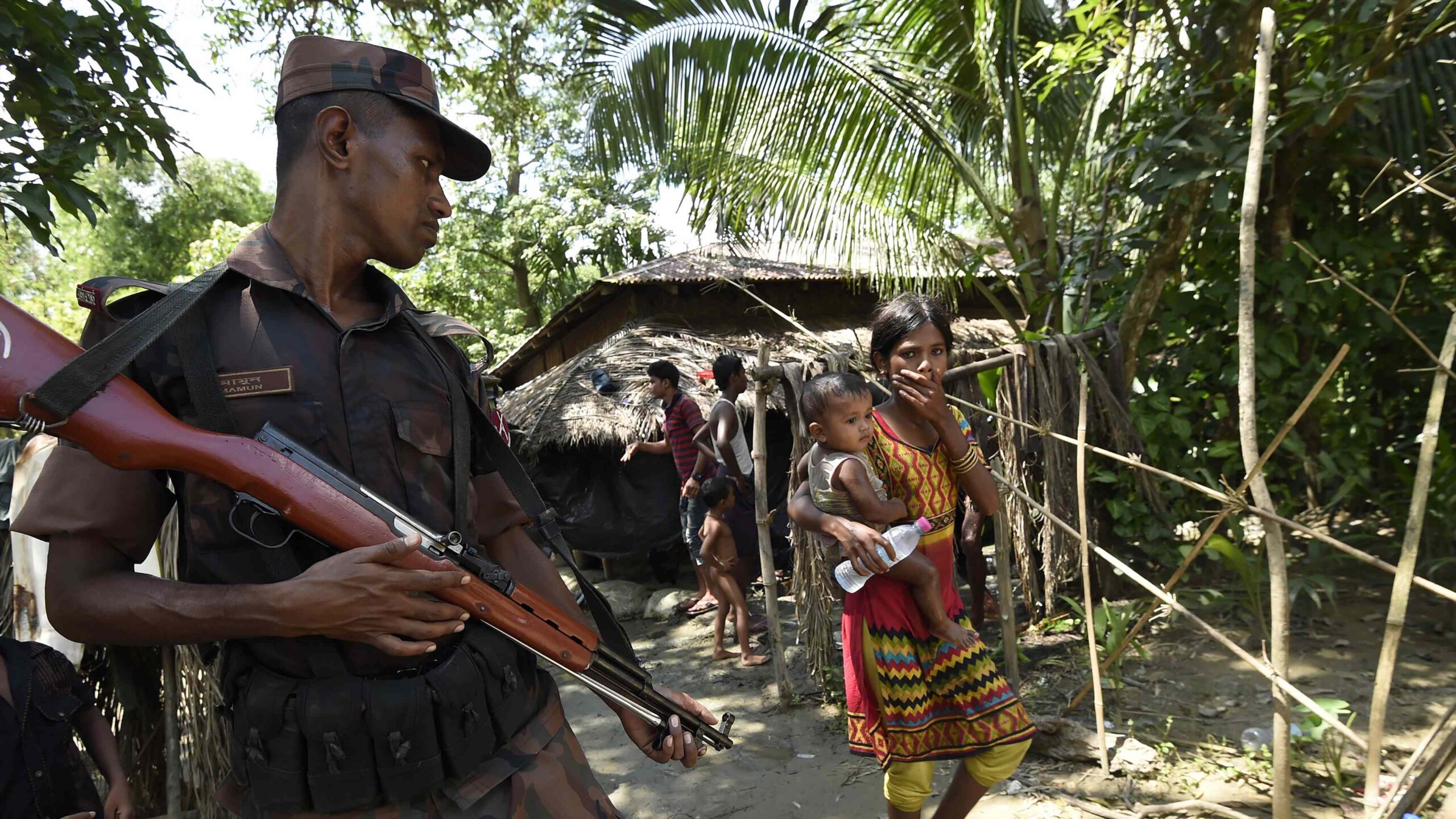
More than one million Rohingya have fled to Bangladesh since 2017, creating the world’s largest refugee settlement and placing immense humanitarian and economic pressure on the host country.
Nationalist Rally in Myanmar
Meanwhile, a rare public demonstration was held in central Yangon, where hundreds of nationalist activists and Buddhist monks rallied against the genocide case at the ICJ.
Participants waved national flags and displayed banners rejecting allegations of ethnic cleansing. Ultranationalist activist Win Ko Ko Latt told the crowd that Myanmar is “a land where loving kindness flourishes” and claimed that “there is no such thing as genocide” in the country.
The rally was organised by nationalist groups linked to networks formerly associated with Ma Ba Tha, an ultranationalist organisation officially dissolved in 2017 but still active under various names.
Led by Win Ko Ko Latt and Buddhist monks known for their support of the military-aligned Union Solidarity and Development Party (USDP), the demonstration expressed solidarity with Myanmar’s delegation at The Hague.
Organisers are reportedly debating whether to involve prominent ultranationalist monk Wirathu in future events, though some members have urged caution due to his controversial reputation.
Although the ICJ lacks direct enforcement powers, a ruling against Myanmar would significantly increase international pressure on the country, which has already faced growing isolation following the 2021 military coup.
Several countries, including the United States, have officially recognised the military campaign against the Rohingya as genocide, while related cases are ongoing at the International Criminal Court and in Argentina.
The military operations targeting the Rohingya began during a period of civilian-led governance under Nobel Peace Prize laureate Aung San Suu Kyi, who personally travelled to The Hague in 2019 to defend Myanmar’s generals.
That defence failed to shield her from detention after the military seized power in 2021. Now 80 years old, Aung San Suu Kyi remains imprisoned as a final ICJ ruling is expected to take months or even years.