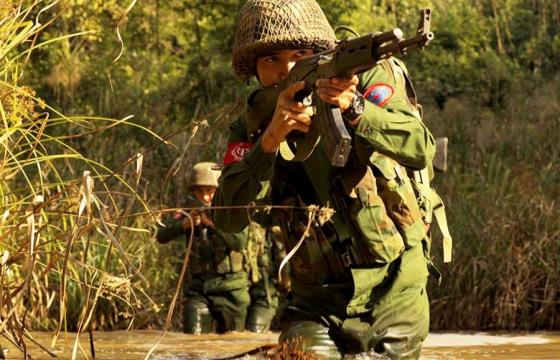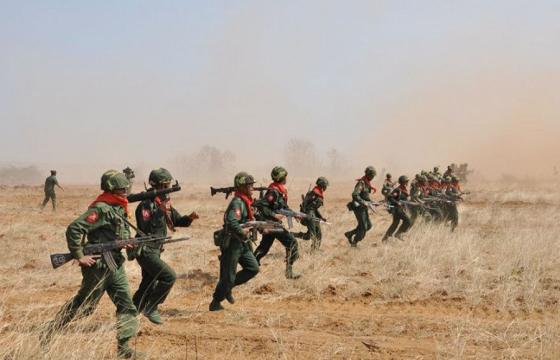

Over a six-month period from May through October 23, 2025, townships including Buthidaung and Maungdaw in northern Arakan (Rakhine) State have seen 57 civilians — 40 killed and 17 injured — fall victim to ambushes and attacks by the Muslim armed group Arakan Rohingya Salvation Army (ARSA), according to data compiled by DMG.
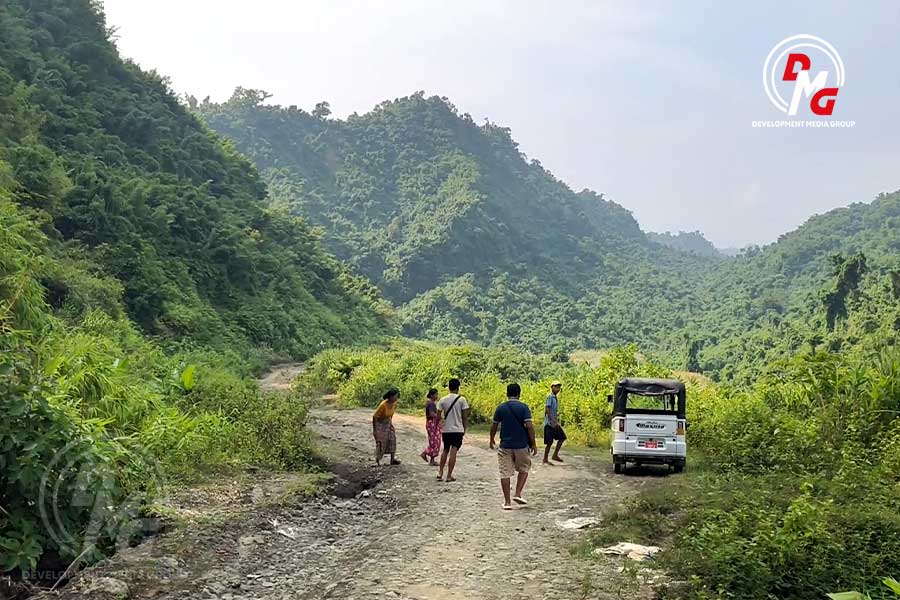
On October 22, ARSA gunmen opened fire on a passenger vehicle carrying goods and travelers from Zaetipyin Village in Rathedaung Township toward Kyaukpandu Village in Maungdaw Township, along the Mayu Mountain Range Road. The attack left two women dead and two men injured.
The deceased were identified as 30-year-old Daw Wai Wai Soe, a displaced person from Thinponetan Village, Sittwe Township, and 40-year-old Daw Naing Naing Shwe from Inndin Village, Maungdaw Township. The injured included the driver, 30-year-old U Htun Win from Kyaukpandu, and passenger 25-year-old Maung Than Htwe.
“People are really scared to travel now. You never know who might be lying in wait by the roadside, or who could get shot and taken away. They’re not just ‘armed groups’ anymore, they’re bandits. We just want the Arakan Army (AA) to deal with them quickly,” said a resident of Kyaukpandu.
The AA confirmed it is continuing clearance operations against ARSA cells sheltering within Maungdaw Township, aiming to reduce violence and safeguard public safety.
On October 21, Ko Kyaw Soe Win of Pyinshay Village, Buthidaung Township, was shot dead, and his companion injured when ARSA ambushed their motorbike near Aungtharyar Village. They had been traveling from Taungpyoletwea Town in Maungdaw Township to Kyeinchaung Village along the Kyeinchaung–Taungpyoletwea Road.
Earlier, on October 11, three traders from Maungdaw Township returning from Taungpyoletwea Town were ambushed near the Laterakhwa intersection. 22-year-old Ko Nyein Chan was killed, and two others were injured.
On October 5, 28-year-old Ko Min Tun Aung sustained injuries when ARSA detonated an improvised mine targeting a motorbike transporting goods from Taungpyoletwea to Aungtharyar.
Residents said that the spike in ARSA attacks in October has made travel across Maungdaw increasingly perilous. Local Arakanese, Mro, Thet, and Khami communities rely on daily travel for trade, food foraging, and fishing, and many of the victims were attacked during such routine trips.
“With so many Muslims living here, it’s obviously tough for the AA to keep an eye on everything. We’re risking our lives just to do our trade. And the worst part? You hardly ever see Muslim victims among those ARSA kills. It’s obvious that ARSA is trying to stir up racial tensions on its own,” a merchant from Maungdaw commented.
On September 28, AA patrols near Upper Innchaung Village discovered six bodies of civilians from Tamanthar and Done Nyo villages, Maungdaw Township, who had been killed by ARSA combatants.
Border security remains a persistent challenge, as ARSA units often retreat across the Myanmar–Bangladesh frontier after attacks. Locals and AA sources note that gunmen frequently flee into Bangladesh, complicating efforts to track and neutralize them.
Buthidaung and Maungdaw townships are areas of volatile ethnic tensions, where successive rulers have committed human rights abuses, and the AA, which currently controls the region, is also accused of human rights violations, according to some Muslims in the diaspora.
Wai Hin Aung, a political analyst and a writer, criticized the silence of some human rights actors regarding abuses by ARSA and the Rohingya Solidarity Organisation (RSO). “Since 2016–17, when RSO and ARSA have killed civilians in Buthidaung and Maungdaw, groups that talk a lot about ‘human rights,’ as well as the National Unity Government (NUG) and international organizations, often stay silent. That lack of condemnation is really disheartening,” he said.
Given the ongoing threats from ARSA and RSO, the AA has warned residents against traveling alone or in small groups through forests or remote areas in border communities. Locals are also urged to notify AA officials and security personnel in advance if they need to travel for emergencies, such as health-related issues.