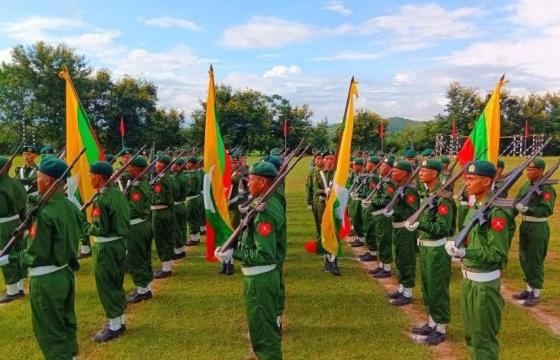

As the coup junta gradually enacts incremental political measures, the resistance-run National Unity Government (NUG) must pursue practical reforms rather than superficial, short-term initiatives, military analysts told Than Lwin Times.
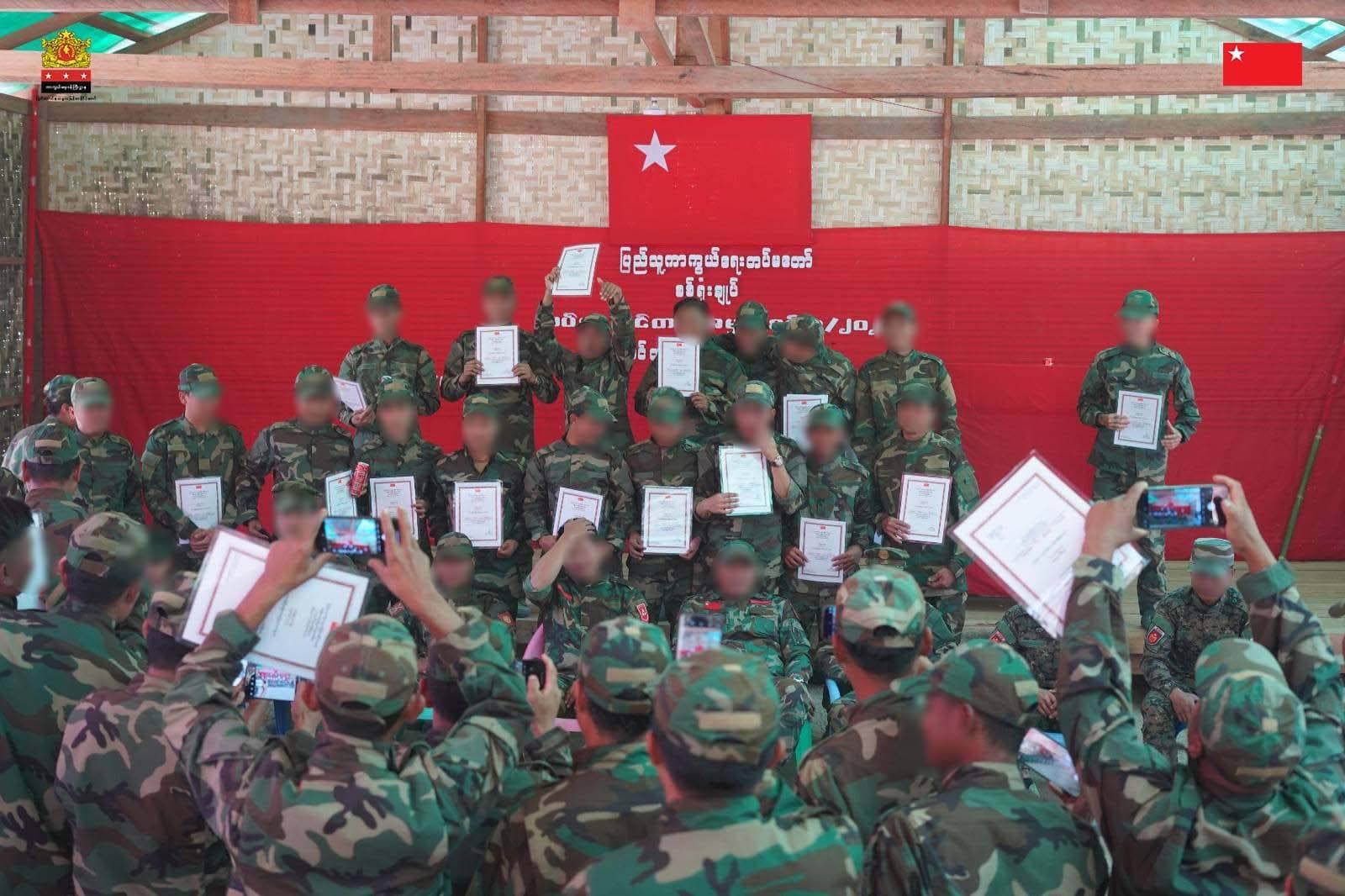
The NUG announced on February 8 that the People's Defence Force (PDF) Commanders' Meeting (1/2026) under its Ministry of Defence (MOD) was successfully held over five days this month.
The meeting covered military fundamentals, militia strategy, command and control systems, leadership, troop-building efforts, and reviews of military goals for 2026.
On January 1, the NUG’s MOD released a report, serving as a New Year’s motivation, declaring that war-winning strategies would be implemented.
Observers and the public increasingly believe that both the NUG’s MOD and the resistance’s leadership are relying on rhetoric and remain weak in preparing for concrete, practical warfare.
Ko Naung Yoe, a military researcher at the Myanmar Defense and Security Institute (MDSI), emphasized that the NUG should focus on developing strategic military plans instead of relying on short-term military politics and temporary mobilization to rally public support.
“The NUG really needs to manage its resources carefully. It should take a close look at its own weaknesses and carry out meaningful reforms. It needs to come up with military strategies that use its strengths and exploit the enemy’s weaknesses most effectively. What it doesn’t need are motivation plans that just temporarily excite the public. My hope is that if the NUG implements real, effective reforms, it can achieve the military successes the public wants. These are my recommendations to the NUG,” he said.
Prior to the recent meeting, the NUG’s Commanders’ Meeting convened for the first time in the fourth week of August last year, during which it announced the formation of a Special Regional Military Command.
The NUG announced that this month’s meeting reviewed the military strategies outlined in the first meeting and discussed the objectives to be pursued this year. It also addressed the troop buildup and preparations needed to launch a decisive offensive aimed at achieving revolutionary success as quickly as possible.
The NUG announced on August 27 that the Special Regional Military Command, operating under the No. 1 Military Region Administration, is under the direct command of the PDF Headquarters.
The NUG had previously announced that the newly formed command would oversee battalions, PDF units, and drone strike teams, while intensifying operations in collaboration with allied ethnic armed organizations (EAOs) and local resistance forces.
The Spring Revolution sparked by the coup has now been underway for half a decade, yet hopes of forming a major military coalition and launching a large-scale, comprehensive offensive to overthrow the military dictatorship have yet to materialize.
On the other hand, as the junta holds an election and plans to install a proxy government to gain international legitimacy and recognition, analysts suggest there could be major shifts in the political and military landscape in 2026.
Compared to the junta’s military preparations, the current situation does not make it viable for the resistance forces to mount a decisive, coordinated major offensive, said Sergeant Zay Ya, who previously served in the junta’s air defense before joining the Civil Disobedience Movement (CDM), an anti-coup campaign of civil servants and security personnel refusing to work for the regime.
“Just looking at the preparations on both sides, it’s not really possible yet to launch a full-scale major offensive to overthrow the junta. But of course, we don’t know what plans or trump cards the NUG might be keeping behind the scenes,” he told Than Lwin Times.
After five years of the coup, Senior General Min Aung Hlaing held an election excluding major democratic parties, which anti-dictatorship forces have denounced as a sham.
The junta is moving to bring all three branches of government, the executive, judiciary, and legislature, permanently under military control.
Not only that, before transferring power to the government resulting from the election, the junta recently passed a law to establish a body called the Union Consultative Council, which would enable the coup leader to retain most of the authority.
The junta’s proxy party, the Union Solidarity and Development Party (USDP), won the election, and 25 percent of parliamentary seats filled by military-appointed candidates rather than elected officials will remain under the Myanmar military’s control, ensuring that the next president is the candidate selected by the junta leader.
Ko Naung Yoe has warned that 2026 could be the year that determines which side gains the clear upper hand between the junta and the resistance, and that the NUG cannot afford to rely on words alone, it must take decisive action.