
A report examining war crimes of sexual violence against ethnic women, and their “systematic cover-up” by the Burma Army was released by the Kachin Women’s Association Thailand (KWAT) and the Legal Aid Network (LAN) on 19 January.
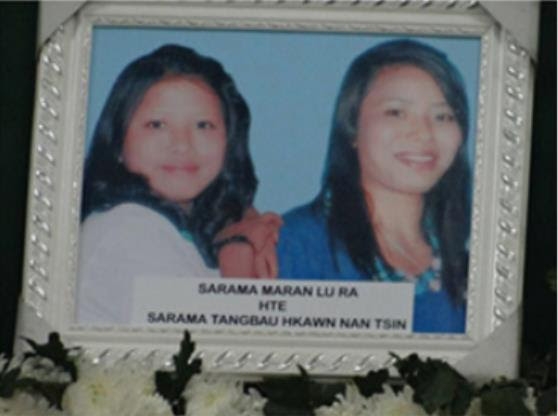
The publication of the report entitled “Justice Delayed, Justice Denied” coincided with the one-year anniversary of the rape and murder of two ethnic Kachin teachers in northern Shan State.
On 19 January 2015, Maran Lu Ra, age 20, and Nan Tsin, age 21, were sexually assaulted, beaten and stabbed to death in their bamboo house inside a church compound in the village of Kawng Kha, 20 miles east of Muse in northern Shan State.
Seng Zin, Joint General-Secretary of KWAT said: “Why do we have to keep silent? This is the public’s voice. We have to stand on the women’s side, on behalf of all.”
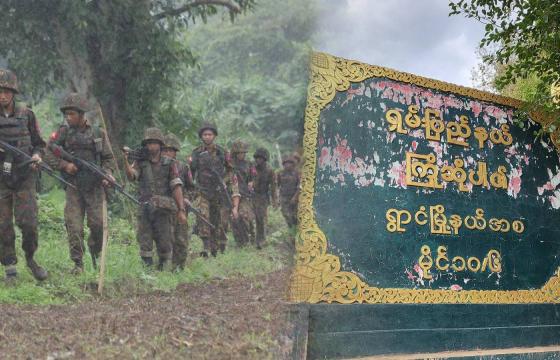
While local police have yet to identify or arrest a perpetrator, and the government has cleared the military of any involvement in the crime, the report identifies the primary suspect as the commanding officer of the Burma Army troops stationed in the village.
Police allegedly questioned some, but not all of the soldiers in the area, and interrogated the commanding officer only briefly. Forensic evidence from the crime scene was also reportedly collected unsystematically: suspicious items were placed in shopping bags, hairs of the perpetrators stored in unsealed envelopes, bloody fingerprints not collected for analysis, and no DNA tests were performed on bodily fluids collected at the crime scene.
In a statement released on 19 January to accompany the report's launch KWAT General Secretary Moon Nay Li said: “The government’s priorities were clear in the Kawng Kha case—protect the military at all cost.”
The murder in Kawng Kha is one of four incidents profiled in the report—others include the forced disappearance of a 28-year-old Kachin woman, Sumlut Roi Ja, in 2011; the murder of a 14-year-old Kachin girl, Ja Seng Ing, in 2012; and the rape and murder of a 28-year-old Shan woman, Nang Khaek, in 2015.
KWAT and LAN fear that the impunity which has accompanied these incidents “will become a catalyst for recurrence of gross human rights violations in the future.”
The report states: “A key factor causing sexual violence is the large number of Burma Army troops deployed throughout the ethnic states.”
It also says that if the army reduced its presence in ethnic areas it would demonstrate that the army was sincerely “seeking a negotiated political solution to the conflict.”
Like other rights groups, KWAT also advocates reform of the 2008 Constitution to eliminate “structural barrier[s]” to justice in Burma, such as the military’s power over executive and judicial institutions.
Seng Zin highlighted how government officials were protected by Article 445 of the 2008 Constitution, which protects them from prosecution for actions committed whilst they were employed by the government.
She said: “If a soldier commits a crime while he is serving, he can’t get punished by anyone—he was doing his duty,” she said of the existing law. “Because of this kind of article, the military can get impunity.”
Last month, the 'Former President’s Security Bill' was also proposed to Burma’s parliament, promising immunity to ex-presidents for any crimes committed while in office. The legislation was not openly challenged by the leadership of the National League for Democracy (NLD), which won the majority of seats in Burma’s general election in November and is due to take power in March of this year.
In the statement accompanying the report Hkawng Lum, a lawyer working with LAN, said that such an amnesty law would not protect President Thein Sein from prosecution for war crimes in an international court bound by the Geneva Convention which dictates that civilians must be humanely treated in times of armed conflict.
By SIMMA FRANCIS / Shan Herald Agency for News (S.H.A.N)
Edited in English by Mark Inkey for BNI