

A powerful new coalition of Myanmar’s opposition forces has warned international mediators that peace talks focused solely on reducing violence will fail unless they directly address the root cause of the conflict: decades of military dominance and centralized authoritarian rule.
The warning follows a significant diplomatic shift in Thailand on July 15, where the newly formed Steering Council for the Emergence of a Federal Democratic Union (SCEF) held separate, closed-door discussions with the Association of Southeast Asian Nations (ASEAN) Special Envoy on Myanmar.
Hosted by the Thai Foreign Minister, the talks marked a rare, coordinated diplomatic push by the resistance. However, the SCEF explicitly stated that its members refused to meet with representatives of the ruling military junta.
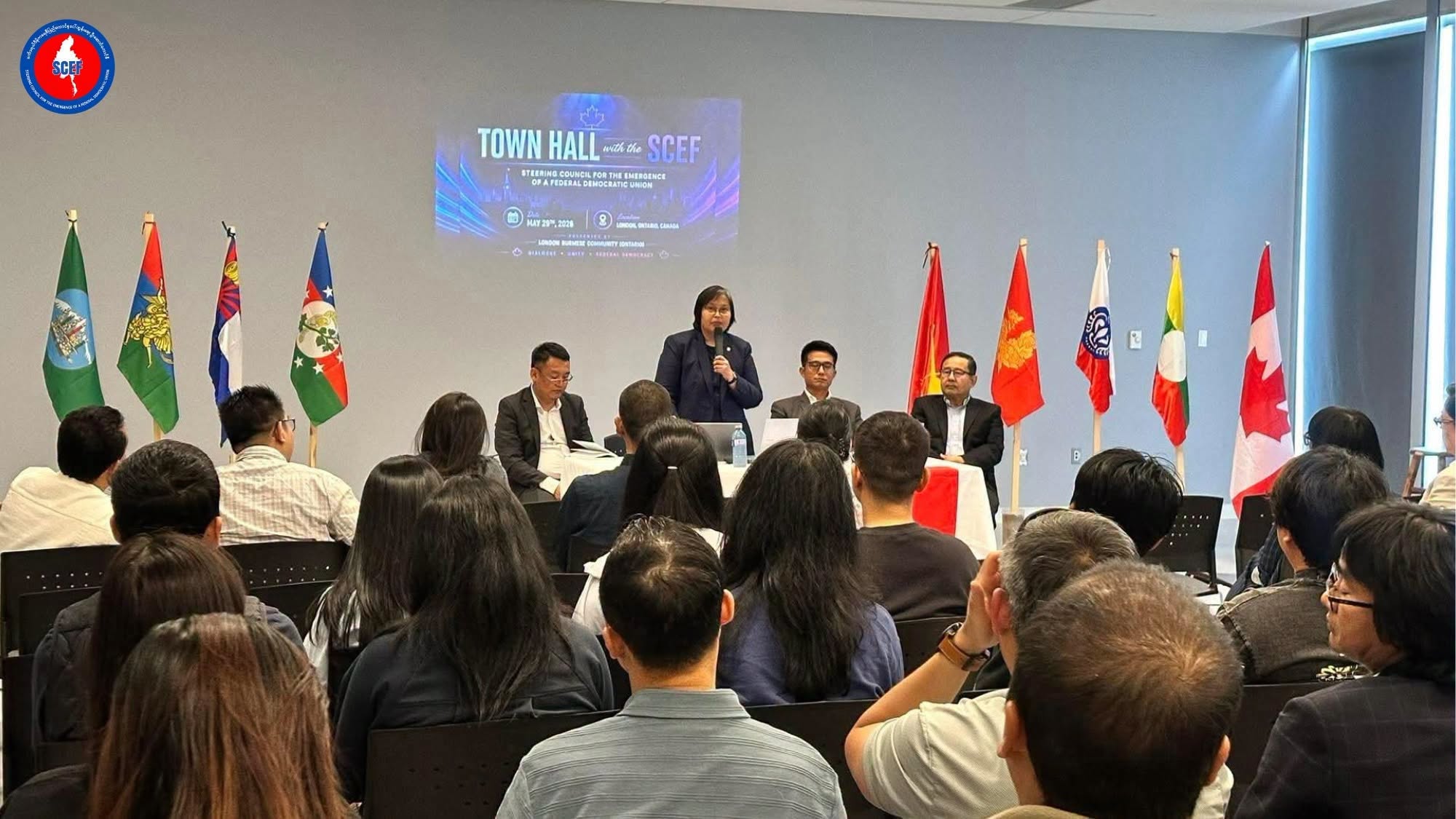
Formed on March 30, 2026, the SCEF functions as a major political and military alliance.
It unites the opposition National Unity Government (NUG), the Committee Representing Pyidaungsu Hluttaw (CRPH) — a body of ousted lawmakers elected in 2020 — and four powerful Ethnic Armed Organizations (EAOs): the Kachin Independence Organization (KIO), Karen National Union (KNU), Karenni National Progressive Party (KNPP), and Chin National Front (CNF).
The alliance stressed that the meeting in Thailand should not be misconstrued as the beginning of formal peace negotiations with the military regime. Instead, it was an opportunity to communicate the opposition's political redlines firmly.
"Although the junta publicly claims it is open to talks, it is actually trying to divide the resistance by making fragmented, separate offers to individual groups," said Neh Nel Ploe, a member of the SCEF’s Foreign Affairs Working Group. "The regime has shown no genuine political will or concrete roadmap to resolve the national crisis."
Despite its calls for dialogue, the junta has continued to launch indiscriminate airstrikes against civilians, enforce a strict mandatory military conscription law, and ignore international pressure.
It has repeatedly defied ASEAN’s mandates, refusing to grant envoys access to detained State Counsellor Daw Aung San Suu Kyi — imprisoned since the 2021 coup — release political prisoners, or permit unhindered humanitarian aid.
The SCEF also pointed out that the political reality inside Myanmar has fundamentally shifted from the ground up.
In many territories liberated from military control, resistance forces have already established localized, decentralized governance structures that provide public security, administration, and judicial services.
However, the opposition continues to fight an uphill battle financially.
"The junta can arbitrarily weaponize the state’s entire treasury to fund its war machine," noted Captain Zin Yaw, a former army officer who defected to the anti-coup Civil Disobedience Movement (CDM). "In contrast, resistance forces rely almost entirely on public donations, which naturally limits the scale of their operations."
Compounding these challenges, military analysts note that the junta recently managed to stabilize its collapsing frontlines due to direct diplomatic and economic backing from Beijing, following 'Operation 1027' — a massive, coordinated offensive launched by a separate coalition of three ethnic armies that had pushed the military to a critical breaking point.
The SCEF reiterated that any future peace process must be entirely owned and led by the people of Myanmar, pledging to work with global allies to permanently dismantle the military dictatorship and establish a genuine federal democratic union.
In a parallel diplomatic effort, NUG Foreign Minister Daw Zin Mar Aung also met with the ASEAN special envoy on July 13 to advocate for a united opposition front in future regional engagement.