
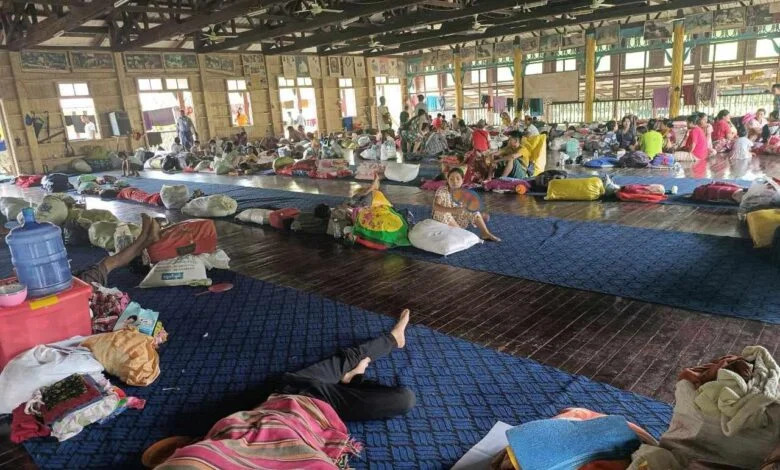
Internally displaced women in Myanmar’s northern Kachin State are facing severe barriers to economic independence as ongoing conflict, security risks, and intense military restrictions choke off livelihood opportunities, according to camp officials and residents.
Before the 2021 military coup, civil society organizations (CSOs) actively provided vocational training, financial literacy, and livelihood support to internally displaced persons (IDPs) across the state.
However, this critical support network has largely collapsed due to the military junta's stringent travel blockades and sweeping restrictions on the delivery of humanitarian aid.
“In the past, aid groups organized vocational courses in areas like making soaps and manufacturing household goods, which provided women with a viable income,” said an official from an IDP camp in Gwayhtu Village, Waingmaw Township. “Now, those opportunities have vanished. What these displaced women need most are safe, sustainable jobs that allow them to support their families.”
Severe security risks compounded the systemic lack of employment. With active fighting and unpredictable travel routes, leaving the camps to find work poses severe physical dangers for women.
“Our movement is entirely restricted, and basic survival has become a daily struggle,” a displaced woman living in Waingmaw Township explained. “If there were home-based cottage industries or remote work opportunities that allowed us to earn an income without leaving the camp, that would be ideal. Stepping outside means putting our personal safety at immediate risk.”
This localized crisis reflects a broader national trend.
According to a joint United Nations report by the UNDP and UN Women, titled 'Uneven Burdens: Women in Myanmar's Crisis Economy,' women across Myanmar are disproportionately bearing the economic brunt of the country's civil war and subsequent financial collapse.
The UN report revealed that approximately 42% of women in Myanmar currently have no personal income—a significantly higher economic deficit than that experienced by men.
In rural and conflict-affected zones, this disparity is worsened by deep-rooted gender roles. The report highlights that women are not only struggling to generate income but are also shouldering the primary responsibility for unpaid care work, including looking after children, the elderly, and managing households under siege conditions.
Furthermore, forced displacement, volatile transport infrastructure, and a total lack of microfinance or start-up capital prevent displaced women from establishing long-term, self-sustaining livelihoods.
To mitigate the widening gender disparity, the UN report recommends that international donors and aid agencies systematically integrate employment creation, direct financial capital, and targeted livelihood programs for women into both immediate humanitarian responses and long-term post-conflict recovery frameworks.