

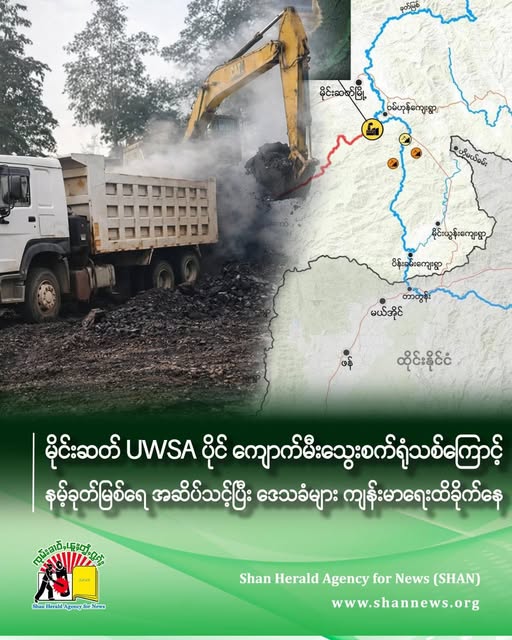
The Nam Khok (Kok) River, which flows through Mong Hsat Township in eastern Shan State, is being polluted by a newly built coal plant operated by the United Wa State Army (UWSA), which controls the area—posing risks to local residents’ health and the agricultural sector, the Shan Human Rights Foundation (SHRF) said on March 22.
The plant, owned by the UWSA, began operating in November 2025.
The plant, located just 19 kilometers from the Thai border in Chiang Rai, currently supplies electricity to UWSA’s military bases, weapons factories and rubber processing facilities, the statement said.
“The coal power plant has only just begun operating, so the impacts are not yet very evident. However, coal mining in the area has been ongoing for a long time,” said Ying Leng Harn, spokesperson for the SHRF.
According to the SHRF, there are concerns that toxic substances such as mercury, lead, and arsenic discharged from the factory could flow into the Nam Khok River.
Locals said a pungent coal smell lingered in the air outside their homes, raising fears of respiratory problems from air pollution as well as the risk of acid rain.
According to the SHRF, locals using water from the Mekin Stream south of the coal mine are experiencing skin irritations and have begun to see fish die in the stream.
“Now, residents from villages along the Mekin Stream are starting to suffer from skin diseases, and fish are dying in the water. While the exact extent of pollution in the Nam Khok River on the Myanmar side remains unclear, both Thai authorities and activists have confirmed that the section flowing into Thailand is heavily polluted. The impact is believed to be severe,” Ying Leng Harn added.
Satellite images taken on March 10, 2026, show piles of coal and large numbers of solar panels in the plant yard near the Nam Khok River. The SHRF statement said this evidence supports locals’ claims that the plant is a hybrid coal-solar power facility.
According to locals, coal from the nearby mine is transported “day and night” by large 10-wheel trucks to the power plant.
The SHRF also highlighted a similar case in southern Shan State, where the Tigyit coal plant caused skin diseases in about 50 percent of locals and leaked toxic materials into Inle Lake. It warned that the new UWSA-owned plant in Mong Hsat could cause similar environmental damage if strict regulations are not enforced.
Thailand has previously strongly opposed efforts to build a coal-fired power plant in Tachileik, a border town in eastern Shan State.
Growing concerns also exist that the new coal-fired power plant in UWSA-controlled territory will pollute the Nam Khok River and harm communities on both sides of the border.