
Nearly one million Rohingya refugees will once again observe Eid al-Fitr in displacement camps across Cox’s Bazar, as prospects for safe, voluntary, and dignified repatriation to Myanmar remain stalled amid escalating conflict, weak diplomatic traction, and persistent impunity for past atrocities.
One year after high-level assurances raised expectations of imminent return, the situation on the ground has not only failed to improve but has, by several indicators, deteriorated.
From Political Assurances to Policy Paralysis
During Ramadan in March 2025, Professor Muhammad Yunus — then Chief Adviser of Bangladesh’s interim government — publicly stated that Rohingya refugees could return to Myanmar in time to celebrate the next Eid in their homeland. The remarks, delivered in the presence of United Nations Secretary-General António Guterres at a large gathering in Ukhia, were widely interpreted by refugees as a signal of renewed diplomatic momentum.
However, twelve months later, no formal repatriation pathway has materialised.
There have been no confirmed bilateral agreements ensuring conditions of safety, citizenship rights, or international monitoring mechanisms — all of which are considered minimum benchmarks under international standards for refugee repatriation.
Worsening Conditions Inside Myanmar
The absence of progress is closely linked to the deteriorating security and governance environment in Myanmar’s Rakhine State (Arakan), where active conflict between the Myanmar military and the Arakan Army continues to destabilize the region.
Human rights observers and humanitarian agencies warn that conditions necessary for return — including guarantees of non-persecution, restoration of legal status, and freedom of movement — remain fundamentally unmet.
Under international law, particularly the principle of non-refoulement, refugees cannot be returned to a territory where they face serious threats to life or freedom. Current conditions in Rakhine raise significant concerns regarding potential violations of this principle if repatriation were prematurely pursued.
New Displacement Undermines Repatriation Narrative
In a development that underscores the fragility of the situation, an estimated 200,000 additional Rohingya have fled Myanmar over the past year, crossing into Bangladesh to escape renewed violence and insecurity.
This influx not only deepens the humanitarian burden on Bangladesh but also contradicts narratives suggesting that conditions inside Myanmar are improving.
Rohingya community leaders describe a growing sense of disillusionment.
Mohammad Zubair, a senior Rohingya figure and chairman of the Arakan Rohingya Society for Peace and Human Rights, said that last year’s statements had created expectations that are now seen as misplaced.
“There was hope that the international community and governments were serious about our return,” he said. “But there is no visible progress, no transparency, and no accountability. Instead, more people are fleeing the same conditions we escaped.”
Verification Without Protection: A Structural Gap
The repatriation framework remains constrained by a slow and incomplete verification process.
Between 2018 and 2020, Bangladesh submitted a list of approximately 800,000 Rohingya refugees to Myanmar authorities. To date, only around 250,000 cases have been reviewed, with approximately 180,000 individuals confirmed as having originated from Myanmar.
However, verification alone does not equate to eligibility for safe return.
Legal analysts emphasize that repatriation must be accompanied by:
Recognition of citizenship or legal status
Security guarantees backed by credible enforcement mechanisms
Access to livelihoods, education, and basic services
Independent international monitoring, including UN oversight
None of these conditions are currently in place.
Impunity and the Accountability Deficit
At the core of the stalled repatriation process lies a broader accountability crisis.
The mass displacement of Rohingya in 2017 followed widespread allegations of crimes against humanity and genocide. While proceedings are ongoing at international legal forums, including the International Court of Justice, there has been limited tangible progress toward accountability on the ground.
Rights advocates argue that without credible accountability mechanisms, any repatriation effort risks exposing returnees to renewed cycles of persecution.
Regional and Global Policy Implications
Bangladesh continues to host the world’s largest refugee settlement, bearing significant socio-economic and environmental pressures. Despite sustained appeals, international funding for the Rohingya response remains inconsistent, raising concerns about long-term sustainability.
Diplomatically, the crisis remains entangled in broader geopolitical dynamics, including limited engagement channels with Myanmar’s de facto authorities and competing regional interests.
Analysts warn that the absence of a coordinated international strategy — combining humanitarian assistance, political pressure, and legal accountability — will likely prolong the crisis.
Another Eid in Limbo
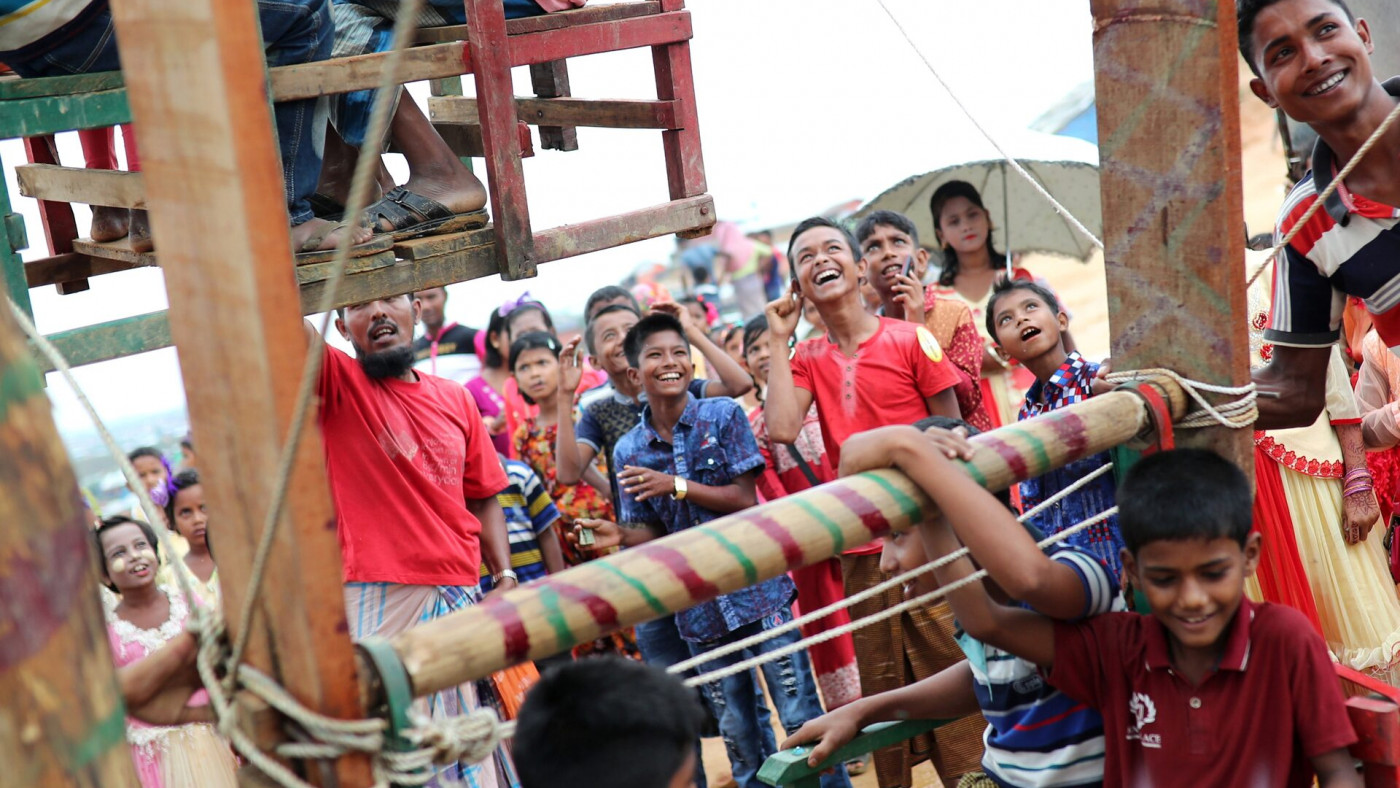
For Rohingya families, the gap between political rhetoric and lived reality is most visible during moments like Eid — a time traditionally associated with home, community, and belonging.
Instead, they remain confined to camps, facing movement restrictions, limited economic opportunities, and uncertain futures.
The promise that they would celebrate Eid in their homeland has, for now, receded into a distant aspiration — overshadowed by protracted displacement, unresolved legal status, and an international response that many perceive as insufficient to match the scale of the crisis.