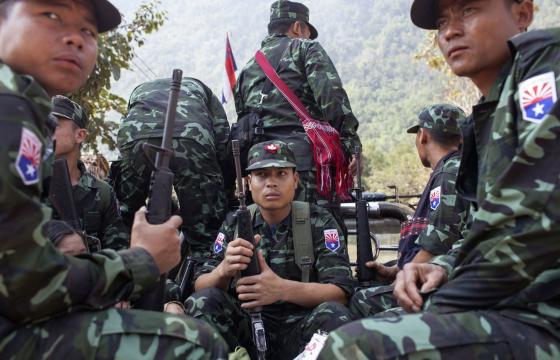

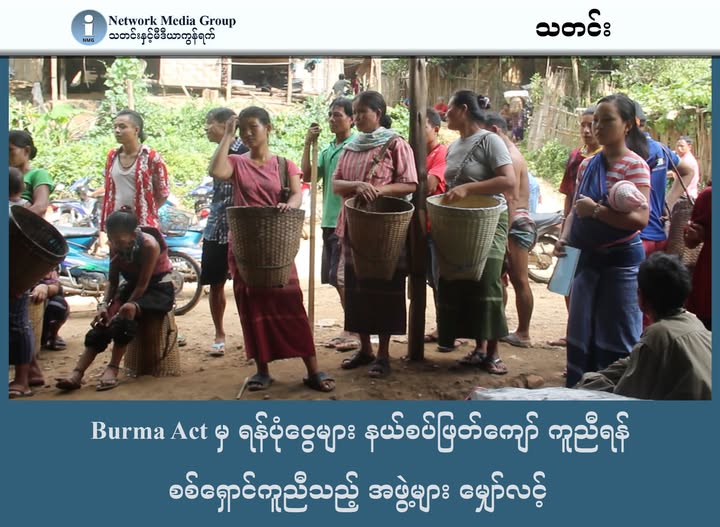
Both displaced people and aid organizations hope that the US government’s 121 million USD in funding allocated under the Burma Act will reach those in need through direct cross-border assistance rather than going to the junta.
With displacement surging across Myanmar due to ongoing military conflict, US President Donald Trump on February 3 signed an extension of the Burma Act, allocating 121 million USD in funding, including 73 million USD designated for humanitarian assistance.
Aid workers said they hope the funds will reach those in need through cross-border assistance, rather than ending up with the junta.
“We’ve been hearing about the Burma Act for a while now. We understand that the US will continue providing humanitarian assistance to Myanmar, and the Senate approved the funding on January 31. Our main concern is that the money goes to the groups actually working on the ground through cross-border channels—not to the junta. That’s really our main hope,” said Naw Cherry, spokesperson for the Karen Peace Support Network (KPSN).
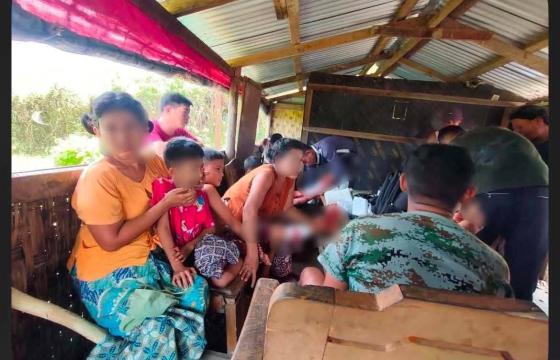
Over 3.6 million people have been displaced across Myanmar by conflict and junta airstrikes, while international aid continues to decline. More than 1.2 million displaced people, about one-third of the nationwide total, are in Karen State, struggling to survive and secure their livelihoods.
Because of the junta’s deliberate attacks, displaced people cannot return home and are constantly on the move, worsening their already dire situation.
“In Nyaunglebin Township, Bago Region, internally displaced people are being forced to move constantly because of the junta’s ongoing airstrikes and drone attacks. We’ve made long-term plans, but right now, on the ground, the IDPs are really struggling to survive. Ideally, we’d like to give each family five bags of rice, but with the resources we have, we can only manage one,” Naw Cherry added.
Similarly, in refugee camps along the Karenni State–Thailand border, 80 percent of residents face the risk of food shortages due to funding cuts. Organizations like the International Rescue Committee (IRC), which provides health care to refugees, are also set to cease operations in March.
“If the Burma Act funding actually reaches us, it would be a really positive sign. Right now, health services have been cut back because of funding shortages, and the Burma Act money could help restore some of that. Even things like water distribution and garbage collection, which were previously supported by NGOs, are also running into problems,” said U Nay Kaw Htoo, chair of the Karenni Refugee Committee (KnRC).
The Burma Act funding approved by the US government will cover humanitarian assistance, food and medical supplies, support for justice for the Rohingya, aid for political prisoners, and other non-lethal assistance.
Aid groups have emphasized that international aid will only be effective if it is channeled directly to civil society organizations working on the ground, rather than going through the junta.