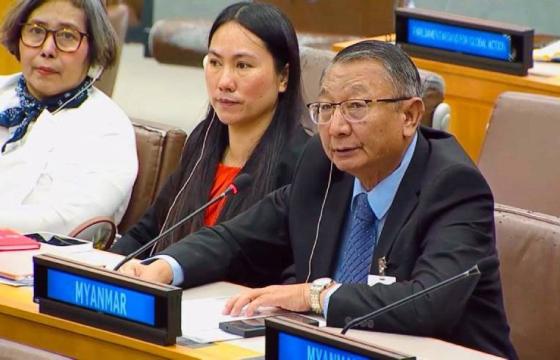

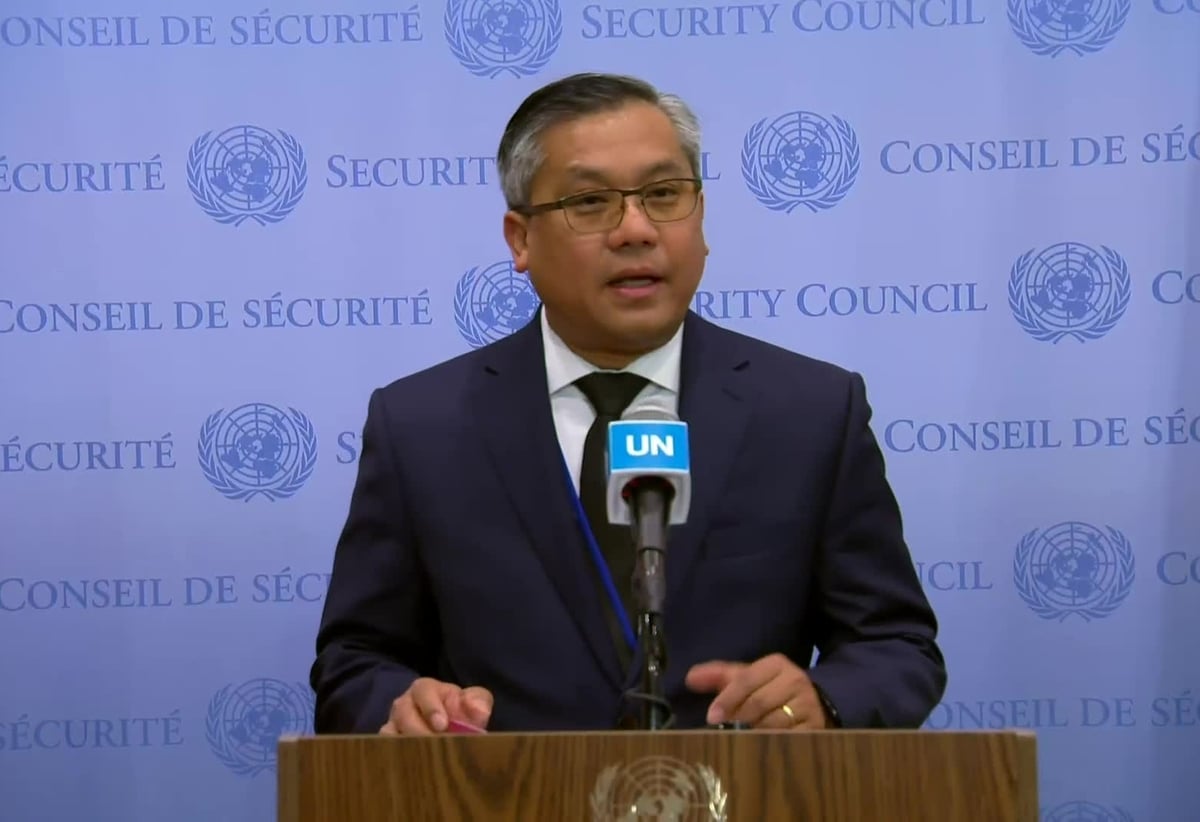
On 20 January, Myanmar’s Permanent Representative to the United Nations, Ambassador Kyaw Moe Tun, has called for stronger international legal action to prevent and punish crimes against humanity, warning that Myanmar’s military junta continues to commit widespread and systematic abuses against civilians and cannot evade accountability through sham elections.
The test of Ambassador Kyaw Moe Tun’s statement is as follows.
Mr. Chair,
I wish to congratulate you on your election and assure you of our full support for your leadership.
I also wish to express our appreciation to the International Law Commission, in particular to the Special Rapporteur, Professor Sean Murphy, for his work on the draft articles on the prevention and punishment of crimes against humanity.
This session takes place at an important moment, marking the eightieth anniversary of the Nuremberg Tribunal. The principles affirmed at Nuremberg, including individual accountability for serious international crimes, continue to guide efforts to strengthen international law on crimes against humanity.
Myanmar welcomes the participation of non-governmental organizations and civil society organizations in this process. Based on our experience, their work with victims and affected communities is of particular importance, especially where access to justice is limited. Their engagement contributes valuable perspectives to the discussions.
Mr. Chair,
Myanmar considers the elaboration of a convention on the prevention and punishment of crimes against humanity to be a necessary step toward strengthening the international legal framework in this area.
The ongoing case between the Gambia vs. Myanmar at the International Court of Justice is the best example. The military junta is trying to escape from its international crimes against Rohingya in an absence of such convention on the prevention and punishment of crimes against humanity.
As I speak, the military junta continues perpetrating the international crimes against not only Rohingya but also all people in Myanmar.
While the prohibition of crimes against humanity is well established under international law, gaps remain in the absence of a dedicated convention to ensure effective prevention, accountability, and cooperation at the national level.
Crimes against humanity constitute breaches of obligations erga omnes under international law. The legal consequences of such breaches extend to the international community as a whole. The draft articles seek to address these gaps by clarifying State obligations and reinforcing domestic jurisdiction and inter State cooperation.
In this regard, Myanmar supports the inclusion of provisions concerning preliminary measures when an alleged offender is present, as reflected in the draft articles. These provisions are important to ensure that the exercise of jurisdiction is effective and that accountability mechanisms are not rendered purely theoretical. Myanmar encourages States to give careful consideration to their implementation in practice.
Myanmar further recalls the relevance of the non-refoulement obligation in situations where individuals face a real risk of crimes against humanity upon return. Given the circumstances affecting Myanmar nationals, this safeguard remains closely linked to the preventive objective of the draft articles.
Mr. Chair,
Against this background, Myanmar notes with appreciation the practical relevance of the work of this Preparatory Committee for individuals affected by crimes against humanity. In this regard, it is important to recall the situation in Myanmar following the illegal coup of 1 February 2021, during which civilians have been subjected to widespread and systematic violence by the military junta. According to the Assistance Association for Political Prisoners, a total of 7,695 people, including pro-democracy activists and civilians, have been killed by the junta.
As of 31 December 2025, a total of 23,272 human rights violations have been documented in Myanmar. In addition, more than 9,000 aerial attacks have been recorded, resulting in the deaths of 4,683 people. These figures illustrate the continued impact of crimes against humanity and underscore the importance of effective prevention and accountability.
Crimes against humanity cannot be displaced by sham electoral processes that lack legitimacy and are not free and fair. Attempts by the military junta to mask such crimes through a sham election do not affect their criminal liabilities arising under international law.
Mr. Chair,
Accountability remains essential.
Myanmar underscores that international law itself must not be instrumentalised or misused as a shield to protect perpetrators of crimes against humanity from accountability. Upholding the rule of law requires the rejection of impunity and the timely pursuit of justice for victims.
Tagged Crimes, Global convention, humanity, Myanmar, Myanmar junta