
The junta, having lost much of Arakan (Rakhine) State, is preparing counter-offensives to defend its remaining townships and reclaim territory held by the Arakan Army (AA).
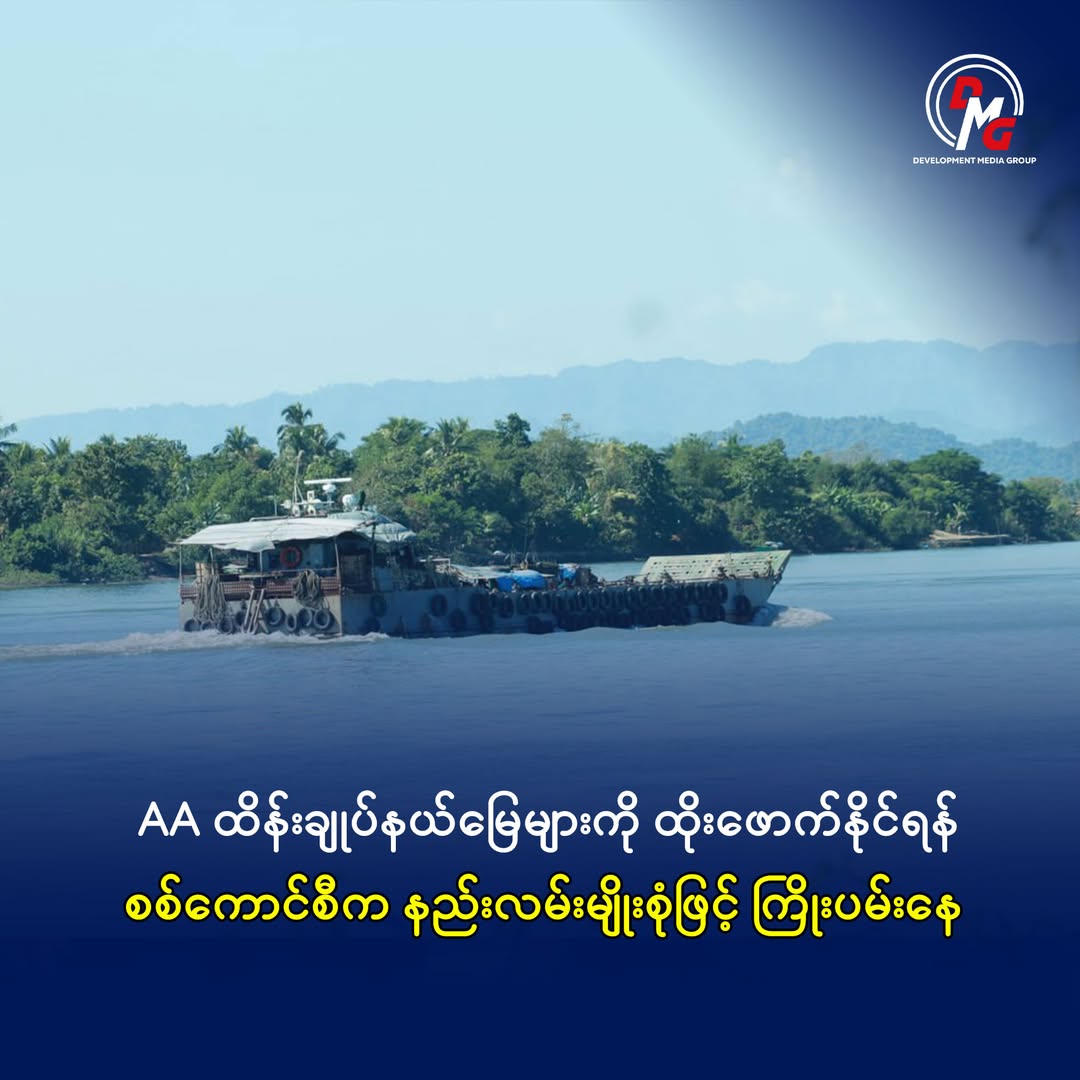
The junta has lost 14 townships in Arakan State, retaining only Sittwe, Kyaukphyu, and Manaung. It is currently using sea routes to transport ammunition and reinforcements to these township capitals.
The junta is preparing ground offensives from Pyay in Bago Region via the Gwa-Ngathaingchaung, Ann-Padan, and Taungup-Padaung roads, likely coordinating the army, navy, and air force to penetrate AA-controlled areas, according to locals and military analysts.
“The junta’s main focus right now is the AA. They’re strengthening their navy and air force to hit AA-held areas and have even rushed new transport planes into service. Their key goal is to retake southern Arakan State,” said Captain Zin Yaw, a former junta officer who joined the Civil Disobedience Movement (CDM), an anti-coup campaign in which civil servants and security personnel refuse to work for the coup regime.
Military analysts said the junta could consolidate its hold on Kyaukphyu Town before moving on Ramree Island and from there attack AA-held towns like Ann, Taungup and Thandwe in southern Arakan State.
Kyaukphyu Township hosts major Chinese development projects, making it crucial for the junta to maintain control, both economically and for its prestige.
Meanwhile, junta troops in Sittwe City, the capital of Arakan State, appear poised to enter AA-controlled Ponnagyun Township, which borders Sittwe Township. A Ponnagyun resident said the regime troops are advancing gradually, using artillery and airstrikes to cover their movement after repairing the Minchaung Bridge, which they had previously destroyed for strategic purposes.
Furthermore, military observers said the junta’s daily airstrikes on Ponnagyun, Rathedaung, and Pauktaw townships bordering Sittwe Township may be a preparatory tactic ahead of a ground offensive.
If the junta retakes Ponnagyun Township, it will further consolidate its control over Sittwe City, the region’s administrative center, and could also open the way for advances into Buthidaung, Maungdaw, and Rathedaung townships.
“While the junta is focusing more on southern Arakan State, it’s also active in the north, basically creating a balancing tactic. That way, even if the offensive in the south fails, they’re ready to push as far as Ponnagyun as a backup plan,” said Captain Zin Yaw.
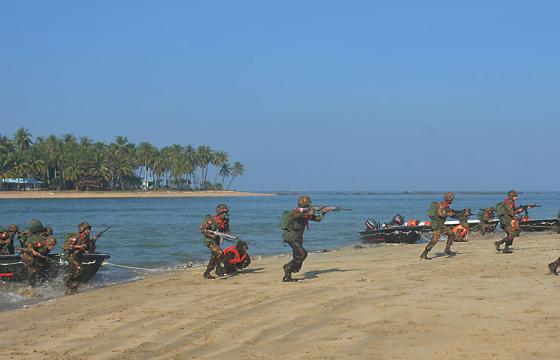
In recent months, junta naval activity off the coasts of Maungdaw and Thandwe townships has increased, possibly in preparation for a landing operation, sources close to the AA said.
While the junta’s counter-offensives have shown some progress, it continues to struggle with logistics, as the AA maintains control over the routes linking Arakan State to the mainland, which could make major victories extremely difficult, sources also suggested.
“Even though the junta is launching ambitious offensives, taking back territories won’t be easy. The AA already controls a huge area and can deploy large forces to defend it,” said Ko Tain Oo, former secretary of the All Arakan Students’ and Youths’ Congress (AASYC).
There is also widespread speculation that the AA, benefiting from advantages such as ample preparation time for defensive warfare, strong local support, and significant combat experience, is well positioned to repel the junta’s attacks.
The junta has stepped up artillery shelling and airstrikes, deliberately targeting villages, schools, refugee camps, and other civilian areas in AA-controlled regions, leading to a rise in civilian casualties.