
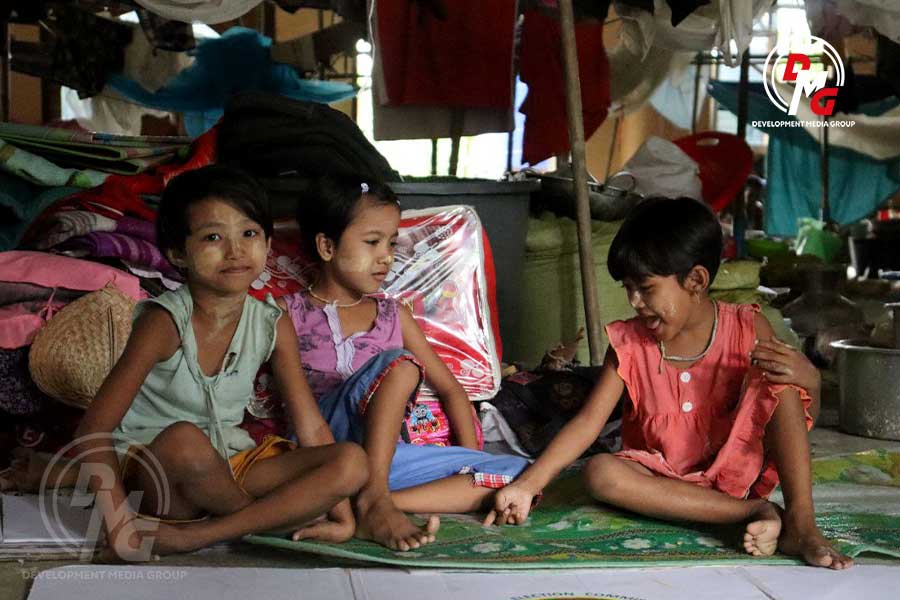
Internally displaced people (IDPs) in Arakan (Rakhine) State are facing urgent needs for warm clothing and blankets as the harsh winter approaches, aid workers and the displaced themselves said.
Many of the displaced, primarily from townships of Ponnagyun, Kyauktaw, Rathedaung, Thandwe, and Gwa, are living in temporary camps, near forests, or on farmland. They are hoping for timely delivery of warm clothes, blankets, and mosquito nets before the colder months set in.
“A thin blanket costs over 30,000 MMK, and one blanket isn’t enough for the whole family. Even if I work all day, I still can’t afford one. I have to sleep on the cold ground, and every winter my joints and bones ache,” said a 40-year-old displaced woman in Kyauktaw Township.
At the Kangyishin IDP camp in Kyauktaw Township, many live and sleep on cardboard and tarpaulin sheets directly on the ground. IDPs reported that each winter, elderly people and children often fall ill due to the harsh cold. They also expressed concern about strokes and the worsening health of people with rheumatic gout.
In Arakan State, the cost of warm clothes and blankets has risen sharply. According to local shop owners, a single blanket now ranges between 30,000 MMK and 100,000 MMK.
“It’s really cold because we live out in the fields. When the winter wind blows, we shiver. We have to sleep on tarpaulin sheets, which makes the cold even worse. And even when we get donated blankets, it’s usually just one per household, that’s not enough,” said a 30-year-old displaced woman in Ponnagyun Township.
Many IDPs have been displaced for nearly two years and have seen humanitarian aid decline over time. They continue to face ongoing challenges related to food, shelter, and basic necessities.
“As the war goes on, it’s getting harder and harder to get enough support. Donations have dropped a lot this year. Most war refugees in both southern and northern Arakan are unemployed and have to take whatever temporary jobs they can find. Many of them are really struggling to get enough food and a safe place to stay,” said a relief worker.
Humanitarian aid remains largely inaccessible to most displaced communities due to severe blockades imposed by the junta and security concerns cited by some aid organizations.
Arakan State is home to nearly 600,000 IDPs, many of whom endure both psychological and physical hardships due to rising prices, hunger, and ongoing threats of airstrikes and artillery shelling by the coup junta.