
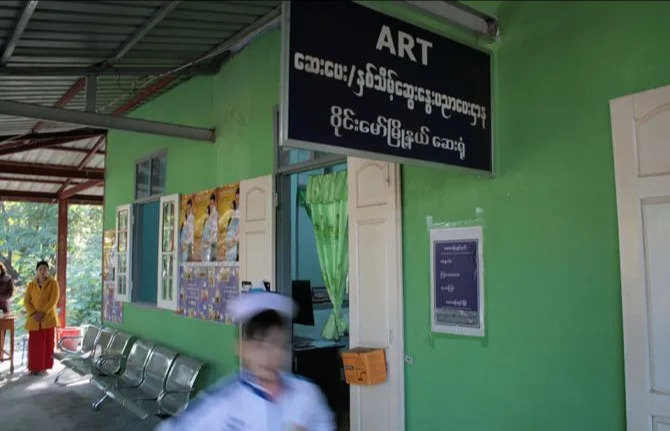
Patients living with Human Immunodeficiency Virus (HIV) are struggling after the junta halted all distribution of Antiretroviral Therapy (ART) medication through local and international non-governmental organizations (NGOs), aid workers said.
The junta began banning the distribution of ART through local and international (NGOs and INGOs) on August 8, allowing access only through health departments under its control.
If ART medications, which require consistent, long-term use, cannot be obtained from NGOs or INGOs, patients will face greater difficulty accessing them, increasing the risk of life-threatening complications.
Due to the junta’s ban, NGOs and INGOs have been forced to hand over their medical supplies to junta-controlled health departments and suspend activities such as medication distribution and HIV education.
“Previously, groups like Marie Stopes International (MSI), PyiGyiKhin, and the International Organization for Migration (IOM) were providing ART medications. Now, they’ve had to stop and turn everything over to the Myanmar National AIDS Program (NAP). They’ve also paused other work, including HIV prevention education programs,” an aid worker said.
There are concerns that medicine shortages among HIV patients could worsen as NGOs and INGOs no longer provide treatment, and that infections could rise due to the suspension of prevention education and outreach programs, he added.
Another aid worker criticized the junta’s decision to bar NGOs and INGOs from distributing ART medication, saying it has discouraged patients.
“The patients are feeling pretty down. Many of them have been getting their meds from MSI for years, and their info never had to be shared with the authorities before. But now, the authorities are taking over everything. And what if there’s a shortage or a delay while the junta’s department is in charge? These medications can’t be interrupted. If that happens, patients could face serious problems, even risk losing their lives,” he told Than Lwin Times.
He also pointed out that it remains unclear how the junta will manage drug distribution and prevent shortages.
There are also criticisms that the junta’s move to control ART distribution is driven by a desire to control the 68 million USD in funds that the Global Fund has allocated to support ART medication distribution through NGOs and INGOs in Myanmar between 2024 and 2026.
HIV infections in Myanmar are rising, mainly because of more unprotected sex among young people enjoying nightlife and limited health knowledge.
According to the latest records, over 270,000 HIV patients in Myanmar are on long-term ART, but aid workers say stricter controls under the junta have made it harder to keep these numbers up to date.