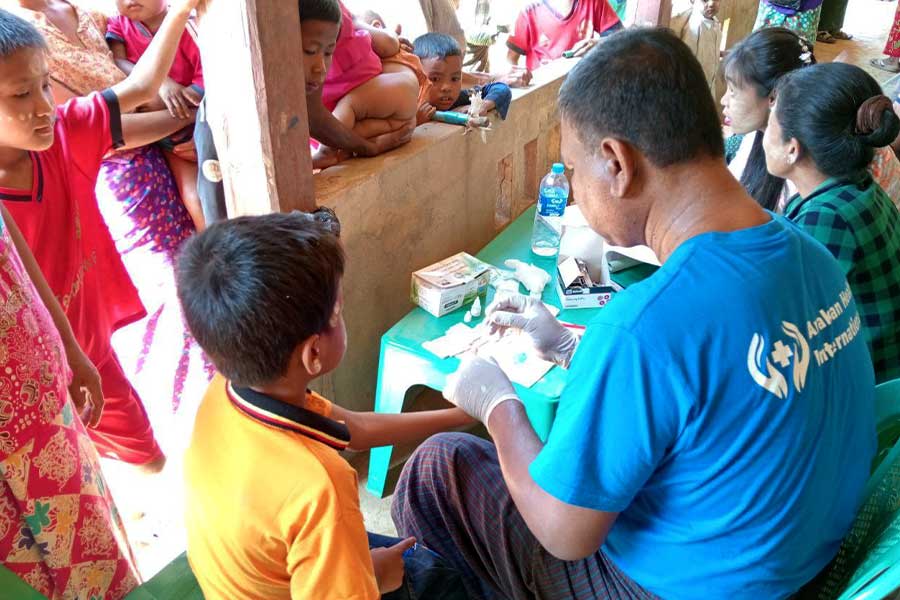
In Arakan (Rakhine) State, where harsh junta-imposed blockades persist, a severe shortage of medicines, hospitals, and clinics is forcing locals to spend large sums to travel elsewhere for healthcare.
Currently, among the Arakan Army (AA)-controlled townships in Arakan State, only Kyauktaw, Mrauk-U, and Minbya have adequate healthcare personnel and medical equipment. As a result, residents from other areas are forced to travel to these townships for treatment, a journey that can cost around 600,000 MMK, placing a significant burden on locals.
A Kyaukphyu Township resident currently receiving medical treatment in Mrauk-U Township told DMG that poor road conditions and high travel costs are making it significantly harder for those in need of healthcare.
“The travel costs more than the treatment itself. Some patients who need to visit the clinic often have even had to mortgage their homes and land just to afford the trips,” she said.
For residents of townships like Kyaukphyu and Ramree in southern Arakan State, a round trip to Mrauk-U in the north for medical care can cost between 600,000 and 1,000,000 MMK, and they often face delays due to poor road conditions.
Seeking medical treatment in junta-controlled townships like Sittwe, Kyaukphyu, and Manaung, or in major cities in central Myanmar, is also not a viable option, residents of Arakan State explained. Such trips involve passing through numerous junta checkpoints, where travelers face the risk of intimidation, threats, or even arrest, creating serious security concerns.
Even traveling from northern Arakan State townships like Buthidaung, Maungdaw, Rathedaung, and Pauktaw to Kyauktaw or Mrauk-U in the same region for medical treatment comes with a high cost.
“These trips involve a mix of land and river travel. Usually, it costs at least 400,000 MMK per person for a round trip. Sometimes, you have to wait a whole week for a doctor’s appointment, which adds extra costs for food and accommodation,” said a Buthidaung Township resident who recently arrived in Kyauktaw Township for medical treatment.
As patients from other townships flock to Kyauktaw, Minbya, and Mrauk-U, the health workforce becomes overstretched, leading to long wait times for appointments.
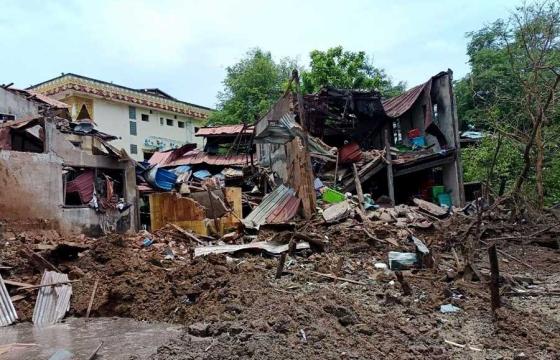
Meanwhile, the junta is severely restricting routes that bring medicine and food into Arakan State and escalating airstrikes on medical facilities, schools, and religious buildings, threatening the lives of local populations.
“The junta is trying to break the people’s resilience and spirit to keep supporting the revolution. That means there’s always a risk it could bomb places where people are receiving medical care. On top of that, it’s really difficult to get medicine and see doctors here in Arakan State,” said a healthcare worker from Kyaukphyu Township.
International humanitarian laws strictly forbid blocking essential supplies like medicine and food from reaching civilians during armed conflicts, as well as attacks on healthcare facilities. Despite this, the junta has flagrantly disregarded these rules and continues to carry out such brutal acts, ignoring the fact that these violations can lead to prosecution for war crimes.
Currently, the AA and its political wing, the United League of Arakan (ULA), are recruiting new health workers and providing medical training in an effort to meet the healthcare needs of Arakan people.