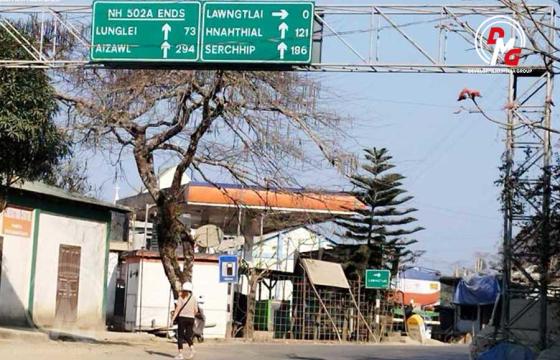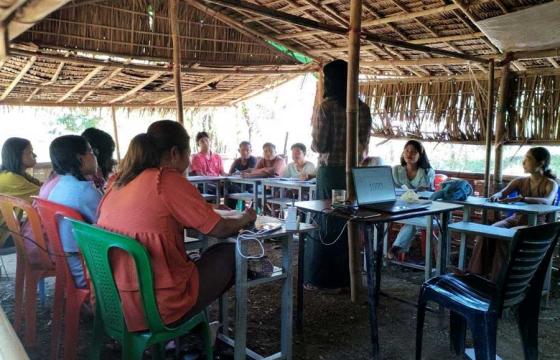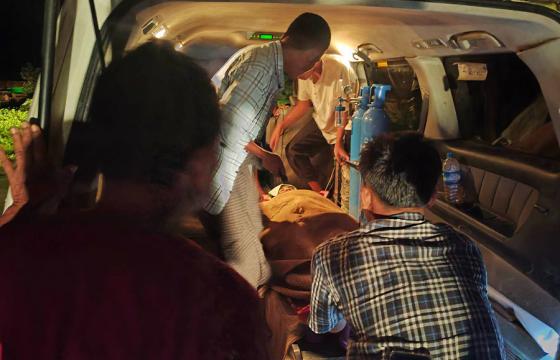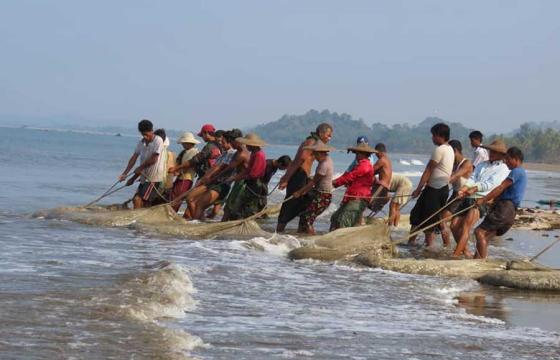

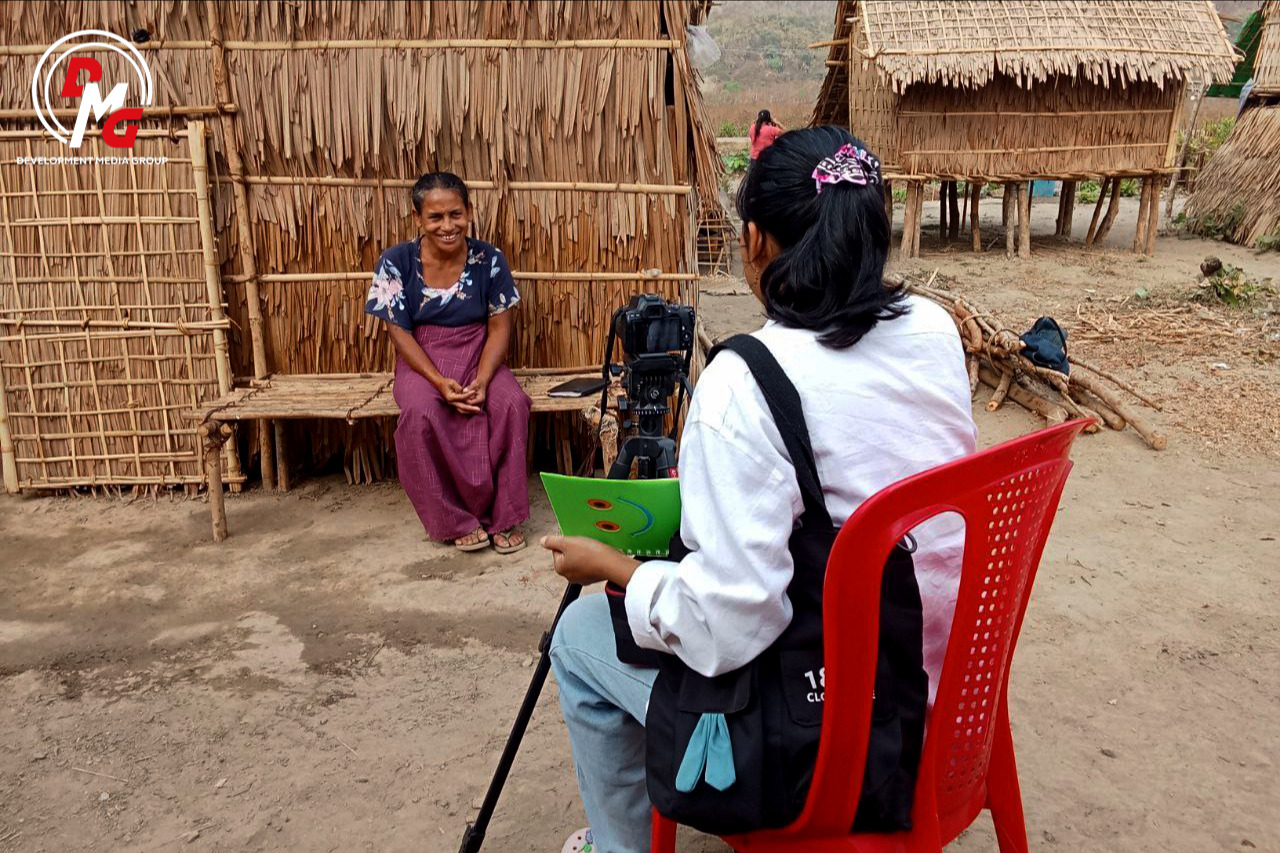
Since the resurgence of fighting in Arakan (Rakhine) State in late 2023 one of the many problems hindering journalists working in the state has been junta-imposed communications blackouts.
Such phone and internet outages have severely hindered local journalists' ability to continue their reporting and posed significant challenges to the timely publication of news.
Talking of the problems that such communication blackouts cause journalists Ma Saung Zar Chi, a reporter from Development Media Group (DMG), said: “Communication outages are a major obstacle for journalists. We can’t perform our jobs properly or with the same enthusiasm because of these blackouts. Information that would typically be easy to obtain with a phone call now requires us to travel to the location of the news event, incurring additional costs.”
But communication blackouts are just one of many hurdles journalists reporting from Arakan State face. For instance they face financial constraints such as insufficient salaries and serious security risks, such as landmines and unexploded ordnance.
Ko Wunna Khwar Nyo, the Western News editor-in-chief explained how such problems combined with the lack of press freedom and the junta's harsh repression of journalists are driving fewer individuals to pursue careers in journalism.
He said: “Journalists receive salaries from their media outlets, but due to funding limitations, these salaries are insufficient. Perhaps, from a journalist's perspective, the job is seen as lacking long-term stability. Furthermore, constant threats from the authorities exacerbate the situation. I think this is why we're seeing fewer people in the field. The number of active journalists has significantly declined compared to the past.”
Additionally, the junta's airstrikes on towns and villages controlled by the Arakan Army (AA) have made reporting increasingly dangerous, with the constant threat of bombings posing life-threatening challenges for journalists in those areas.
Ko Soe Aung, a freelance journalist in Arakan State said: “It is extremely difficult to keep reporting when phone and internet lines are cut off. In situations where journalists must travel to areas hit by the junta's airstrikes, they take on considerable risks, working without any security guarantees.”
Since Myanmar transitioned from previous military rule to a partial civilian government under President U Thein Sein in 2011, the country's media landscape had become progressively more open. However, following the junta's 2021 coup, widespread repression—including the arrest and killing of journalists and the suspension of media outlets’ publishing licenses—has reversed this progress, leading to a significant decline in press freedom.
In Arakan State and throughout Myanmar the junta has intensified its targeted arrests of media professionals, forcing many journalists to seek refuge in areas controlled by ethnic armed organisations (EAOs) or abroad.
Reporters Without Borders (RSF) annually ranks 180 countries in its World Press Freedom Index. Myanmar fell from 139th place in 2020—the year before the coup—to 176th in 2023 and was ranked 169th in 2025.
The situation deteriorated further in early 2025 when the United States (US) government, under President Donald Trump, cut off many international aid funds and projects from the United States Agency for International Development (USAID). This included those that had been supporting Myanmar’s media development and reporting on Myanmar. The US funded Radio Free Asia (RFA) announced that it was shutting its RFA Burmese section and would not be publishing any news on Myanmar, either in Burmese or English by the end of May.
According to a report released at the end of 2024 by Athan, a non-governmental organisation (NGO) advocating for press freedom in Myanmar, 215 journalists were arrested in the four years following the coup. Of these, 54 have been sentenced to long prison terms and remain incarcerated. Furthermore, since the coup in early 2021 until the end of 2024, the junta's actions led to the deaths of 11 journalists, while arrest warrants have been issued for 56 others.
Journalists from Western News, Narinjara, and DMG, all based in Arakan State, have taken precautions to avoid the junta's crackdown since the sentencing of DMG reporter Ko Htet Aung and office staffer Ko Soe Win Aung to 10 years in prison on 28 June 2024.