
The Ta'ang National Liberation Army’s (TNLA) decision to return two towns under its control to the junta has shocked locals and raised questions about resistance unity and the group’s revolutionary objectives.
The TNLA announced that it would return Mogok in Mandalay Region and Momeik (Mongmit) in northern Shan State to the junta following a Chinese-brokered ceasefire agreement, a decision that shocked both town residents and the wider Myanmar public.
Local political analysts noted that the TNLA’s decision to disregard the wishes of residents who strongly oppose a return to junta rule is effectively equivalent to disregarding the revolution itself.
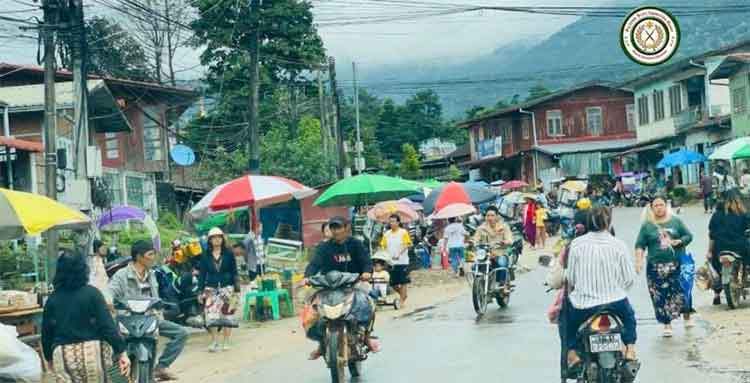
The day the TNLA officially announced it would hand over the two towns to the junta under the ceasefire agreement, residents were left deeply distressed and anxious.
“That day was October 29. We heard the news at around 2:30 pm. People were immediately shocked and panicked. It was obvious that this was a unilateral decision made without any public consent,” a Mogok resident recalled. They were deeply worried, as no one wanted to face the bitter reality of returning to junta rule.
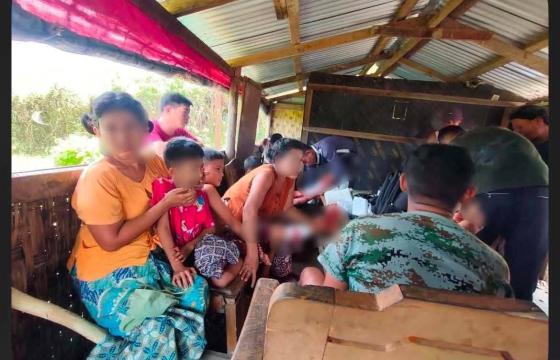
Locals who had endured the junta’s brutality and oppression were both saddened and angered by the TNLA’s decision, unwilling to return to military rule. Even during the TNLA’s operations to capture Mogok and Momeik, junta troops continued to commit atrocities against civilians.
“The junta has never treated the people well. But the atrocities it committed during the recent clashes were so horrific, beyond anything imaginable, that there’s simply no way to forgive the regime,” said a Momeik resident.
The TNLA justified returning the two towns by claiming it was to prevent civilian casualties from the junta’s airstrikes, but locals see this as an insubstantial excuse.
The public criticized the TNLA, saying that while residents of the two towns were more concerned with the success of the overall revolution than their own safety, the TNLA made a decision that seemed to serve only its own interests.
“Even if it’s a relief that the bombing of our town has stopped, the junta will just keep bombing other places. What kind of heart could ignore such a cruel reality?” the aforementioned Mogok resident said. He added that he feared the TNLA’s decision could derail the revolutionary goals.
The TNLA agreed to withdraw from the two towns without notifying allied resistance forces, including the People’s Defence Force (PDF), with whom it had fought to capture the towns. These groups only learned of the withdrawal after the TNLA’s announcement. A source close to the resistance said the move also made it difficult for other forces stationed in the towns to handle the aftermath, further weakening their unity.
Locals also said they opposed the towns being willingly handed back to the junta, and would have preferred an outcome in which the resistance fought with all its strength, even if it ultimately lost.