
Natural disasters in the Inle (Inlay) Lake area of Nyaungshwe Township, southern Shan State, have led to a decline in rice production.
Locals reported that severe disasters, including floods and earthquakes in 2024 and 2025, destroyed hundreds of acres of rice fields in the Inle Lake area, causing economic suffering for farmers.
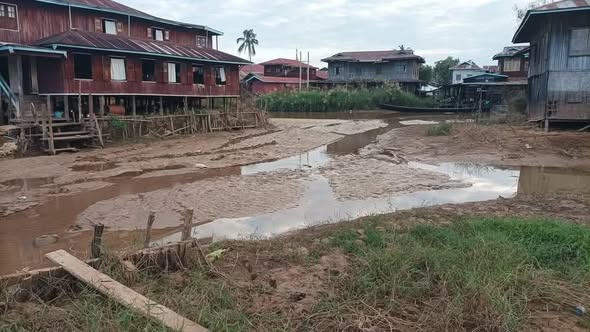
Over the past two years, floods and a deadly earthquake have significantly altered the terrain in the Inle Lake area. Additionally, sediment buildup in the lake has raised its bottom, causing water levels last summer to drop about 1.5 feet below normal.
A resident of Inle Lake said that natural disasters have also reduced rice and other crop yields, impacting local farmers' livelihoods.
“Last year, we went through both floods and droughts. During the rainy season, our crops were flooded and destroyed, and then in the summer, the heat killed the rest. So, the bigger we invested, the bigger our losses. This year, we’re too afraid to invest heavily in farming. For example, if we used to plant five acres of rice, this year we’re only planting three. That way, if we face losses again, it won’t be as devastating,” she told Shan Herald.
Every April, farmers in the Inle Lake area usually plant summer rice, but this year planting is impossible due to excessive sediment. Meanwhile, tomato cultivation has been halted because of insufficient water.
In addition, deforestation around the lake, population growth, the expansion of terrace farming, and charcoal production have all impacted the region's ecosystem.
“Inle Lake has been in bad shape for a long time. We’ve faced natural disasters, and on top of that, human activities have caused even more damage. We really need to plant perennial trees around the lake to help retain groundwater,” said a local young environmental activist.
The social, economic, and livelihood well-being of local communities is fundamentally dependent on Inle Lake.
In addition, southern Shan State, including the Inle Lake area, is experiencing rising temperatures every year. Currently, the lake fills with water after only a small amount of rain, but when the sun becomes intense, the water quickly evaporates, exposing the land beneath.