
Deforestation of mangroves has increased in Arakan State as a result of power cuts, according to local mangrove conservationists.
Since late last year, Myanmar has experienced frequent blackouts, which worsened in February and continued into the monsoon season despite the fact that hydropower is the country’s primary source of electricity.
The power outages have forced locals in rural parts of Arakan State to increasingly cut down firewood for cooking purposes, resulting in rampant mangrove deforestation. Some 75 percent of mangroves have been deforested across Arakan State’s Ramree, Kyaukphyu, Taungup, Ann and Myebon townships, say conservationists.
“Mangrove deforestation has significantly increased since the coup,” said mangrove conservationist Ko Myo Lwin, referring to the military’s February 2021 putsch. “Mangroves have been deforested as a result of electricity shortages. In Ann, some mangrove forests have been almost wiped out.”
Frequent blackouts are still the norm across large swaths of Arakan State, with many households hit by at least two power cuts a day, and each lasting around two hours, according to locals.
Adding to pressures on mangrove forests, the prices of charcoal — which can also be made of mangrove wood — have risen due to higher demand for it as a fuel for cooking, prompting more people to join the business, said Ko Myo Lwin.
U Kyaw Tha Hla, a charcoal seller, said: “Previously, only a few sacks of charcoal sold per day. But more people are using charcoal due to daily power cuts. Lately, more than 20 sacks sell a day.”
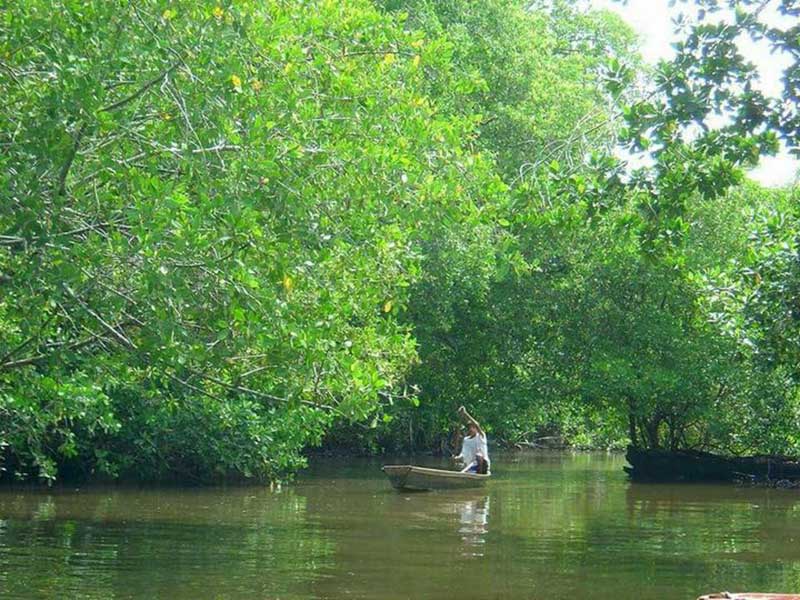
The Wunbaik mangrove forest reserve, which is said to be the second largest mangrove forest in Asia, has been deforested as well, with illegal loggers using boats to access the water-dwelling trees.
“Not just the locals, but concerned authorities must take consistent measures to prevent mangroves from further deforestation,” said social activist Ko Tun Naing from Ramree Township.
People should expect consequences from mangrove deforestation, such as reduced resilience to climate change and natural disasters, said U Oo Than Myint, head of the Arakan State environmental conservation department.
For human populations, one of the major benefits of mangroves is their ability to protect against coastal surges associated with storms and tsunamis.
“Riverbanks will collapse when there are no mangroves. Natural mangrove forests have greater benefits than man-made mangroves, so it is better to keep them as they are,” said U Oo Than Myint Oo.
The Forest Department compiles and updates information on mangrove forests throughout Myanmar once every five years. The most recently available tabulations, from 2015, found that Arakan State had 395,726 acres of mangroves in total.