
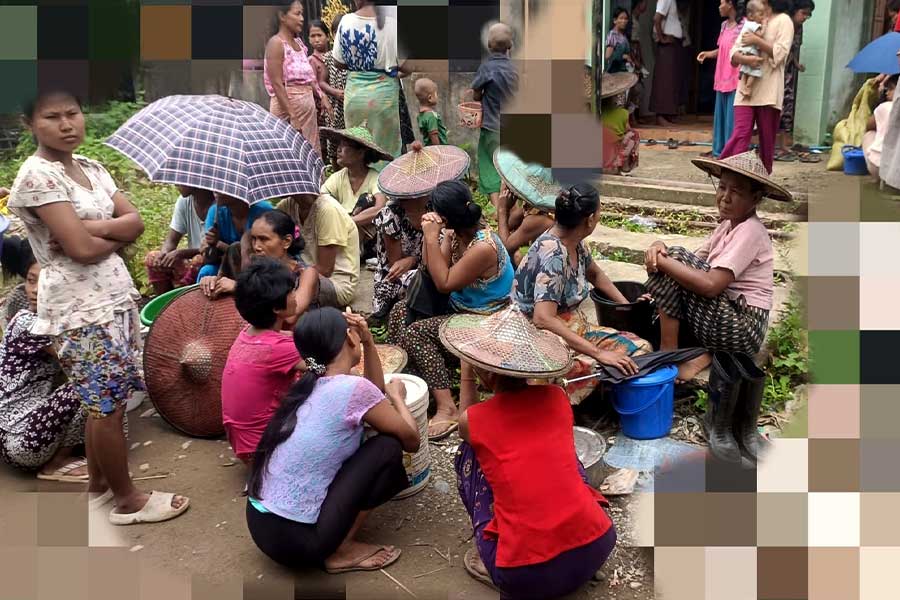
Relentless military junta airstrikes, combined with seasonal monsoon supply disruptions, have plunged residents of Thandwe Township in western Myanmar’s Arakan (Rakhine) State into a severe food and livelihood crisis, local sources report.
Daily aerial reconnaissance and bombing runs have forced local markets to close and day laborers to stop working, crippling the township's hand-to-mouth economy.
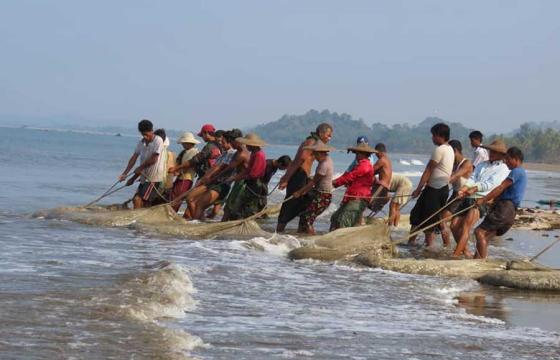
"We survive by selling vegetables, running stalls, or doing whatever odd jobs we can find," a woman in Thandwe told Development Media Group (DMG). "Whenever a junta fighter jet attacks, the market shuts down. If we cannot sell for a single day, we have no food that day."
The crisis is compounded by heavy monsoon weather along waterways, which has severely restricted cargo shipments from northern Rakhine State and driven basic food commodity prices to record highs.
A bag of high-grade Paw Hsan Hmwe rice in Thandwe now costs 260,000 Myanmar Kyat (MMK), while lower-grade rice trades at 230,000 MMK, and imported Indian rice reaches 200,000 MMK per bag.
"Paddy cultivation in Thandwe is limited, so most rice must be shipped from Kyauktaw by boat," a resident explained. "While cargo vessels made three trips a month during the dry season, they can only manage one during the monsoon. Supply is plummeting while demand grows, pushing prices up continuously."
The severe economic hardship comes alongside a deadly escalation in junta attacks.
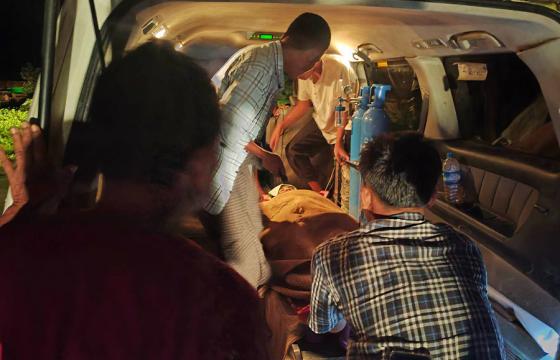
On August 10, an airstrike on Thandwe killed 14 civilians, injured 11 others, and destroyed more than 20 homes, leaving displaced families in urgent need of food and humanitarian aid.