
Citing clashes, tension between armed groups, and the presence of landmines, young people from Namtu Township are becoming laborers in China.
Locals in northern Shan State’s Namtu Township estimate that around half of the youth leave the area to work as laborers in China.
Citing clashes, tension between armed groups, and the presence of landmines, young people from Namtu’s Mangsan village tract are opting out of traditional rice farming and heading across the border to China to work and supplement their families’ income.
Mangsan village resident Nang Ying told SHAN that the phenomenon applies to both ethnic Shan and Ta’ang youth.
“Only children and the elderly are left in some residences,” she said. “Farmers cannot take care of their farms, so cattle enter the farms and eat the crops. Some farmers borrowed money to maintain their farms, but they have not been able to return the money. So they go to work in China.”
In her own village, she estimated, some 30 to 40 people now go to work in China every day; similar patterns have unfolded in 30 other villages in the Mangsan area and one dozen villages in Mongyin village tract since late last year.
Mangsan local Ae Nang said that youth earn 40 yuan per day as laborers in China, or about 8,000 kyats (US$5.22). Some find work on farms, construction sites, and restaurants in Mong Khum, Ruili, and Mong Ting. Others answer the calls of Chinese recruiters who have come to get laborers from the area.
According to Lashio local Nu Nu, those who are single may work in China throughout the year, and those with children might work for four to six months.
“In some villages, half of their people go to work in China. I asked them why they go if they only early 8,000 kyats per day,” she said. “Even when there are no clashes between armed forces in the area, they used to go around and set up landmines. Villagers are afraid to go to their paddy farms because some have accidentally stepped on landmines. That’s why at least one person from each family goes to work in China.”
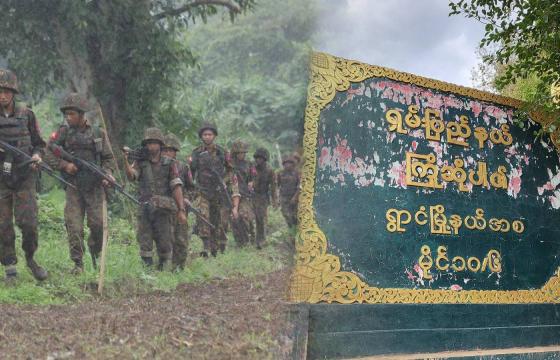
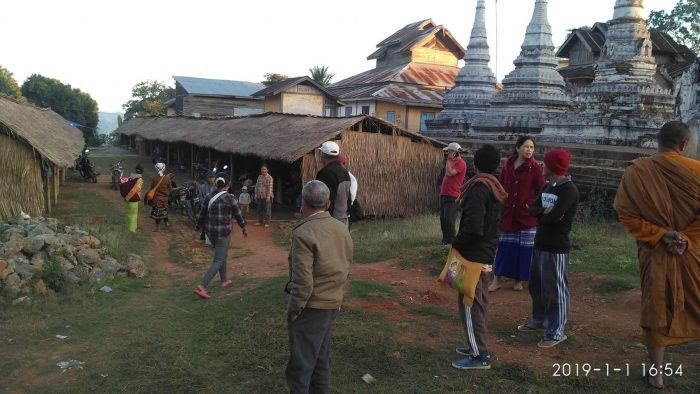
Mangsan villagers fled from their homes and took refuge in a local monastery after clashes broke out in early January between the Restoration Council of Shan State/Shan State Army (RCSS/SSA) and the Ta’ang National Liberation Army (TNLA). They returned to their homes on January 9.
In the Mongyin area of Namtu, government forces, members of the Northern Alliance of ethnic armed groups, and the RCSS/SSA is active in the area.