
Civilians living in areas with limited communication access across Myanmar continue to face the highest risk of death and injury from military airstrikes, according to new data.
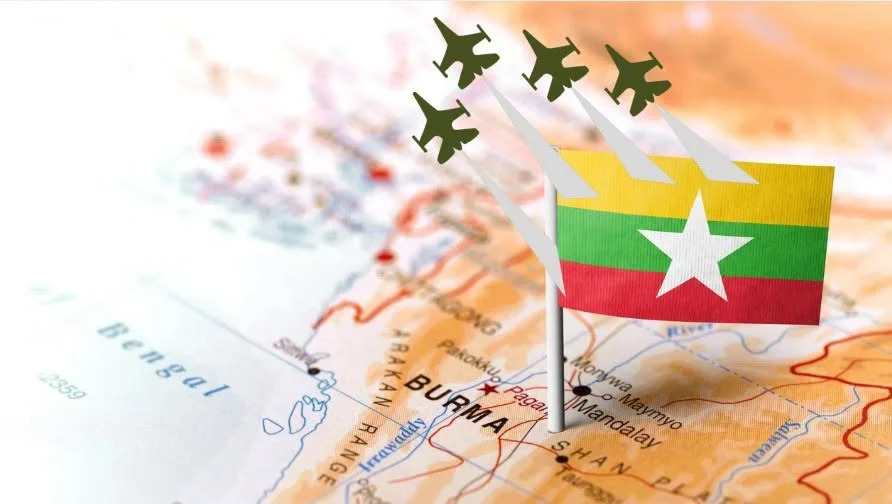
The Myanmar Internet Project (MIP), a research initiative tracking digital rights and conflict, recorded 520 airstrikes nationwide between April and June 2026.
According to its latest quarterly report, these attacks killed at least 314 civilians, including 58 women, 41 children, and 15 elderly individuals.
Notably, approximately 95% of all recorded fatalities occurred in regions where internet access had been deliberately cut off.
MIP spokesperson Ko Thit Nyan stated that the military junta is systematically combining internet shutdowns with heavy airstrikes to achieve multiple strategic objectives.
These include reasserting territorial control, undermining resistance communication, and gaining a military advantage.
"They intentionally cut the internet to conduct airstrikes under the cover of darkness and information blackouts," Ko Thit Nyan said. "That is precisely why 95% of the deaths occurred in areas without internet access. Given the communication barriers, even our comprehensive report likely undercounts the true scale of the casualties."
The crisis has also directly impacted Mon State and adjacent regions.
The report documented at least 22 airstrikes over the past three months in Mon areas, including territories controlled by the New Mon State Party (NMSP), where both mobile phone networks and internet access remain severely disrupted.
According to MIP, the military has increasingly adopted a devastating tactical pattern: conducting reconnaissance flights during the day and launching kinetic strikes at night while residents are asleep. This has inflicted widespread psychological and social trauma on rural communities.
"The physical and psychological toll is immense," Ko Thit Nyan told the Independent Mon News Agency (IMNA). "People cannot sleep properly, nor can they work freely or safely. There is a constant state of terror because no one knows when or where the next strike will hit."
Furthermore, the dual impact of airstrikes and communication blackouts has severely hampered local and international humanitarian aid distribution. Ground teams face immense difficulties coordinating logistics and delivering emergency medical supplies to the hardest-hit zones due to the lack of cellular and internet connectivity.
The MIP report also highlighted the widespread destruction of civilian infrastructure over the three months. Confirmed losses include 22 religious buildings, seven hospitals and clinics, 17 schools, five internally displaced person (IDP) camps, and a critical bridge. MIP emphasized that the targeted destruction of medical facilities and schools has systematically dismantled access to healthcare and education for tens of thousands of conflict-affected civilians.
Geographically, the violence remains concentrated in the country's most active conflict theaters. Approximately 62% of all recorded airstrikes occurred in Chin State, Sagaing Region, and Rakhine State, where intense clashes persist between the military junta and armed resistance groups.