

Although Thailand’s deepening engagement with Myanmar’s military regime could lead to tighter operational restrictions along the shared frontier, observers and resistance leaders believe Bangkok will avoid imposing severe crackdowns on anti-junta groups operating in border areas.
Following steps by regional actors—including China, India, and Laos—to maintain formal ties with the junta, Thailand recently expanded its official dialogue with the regime.
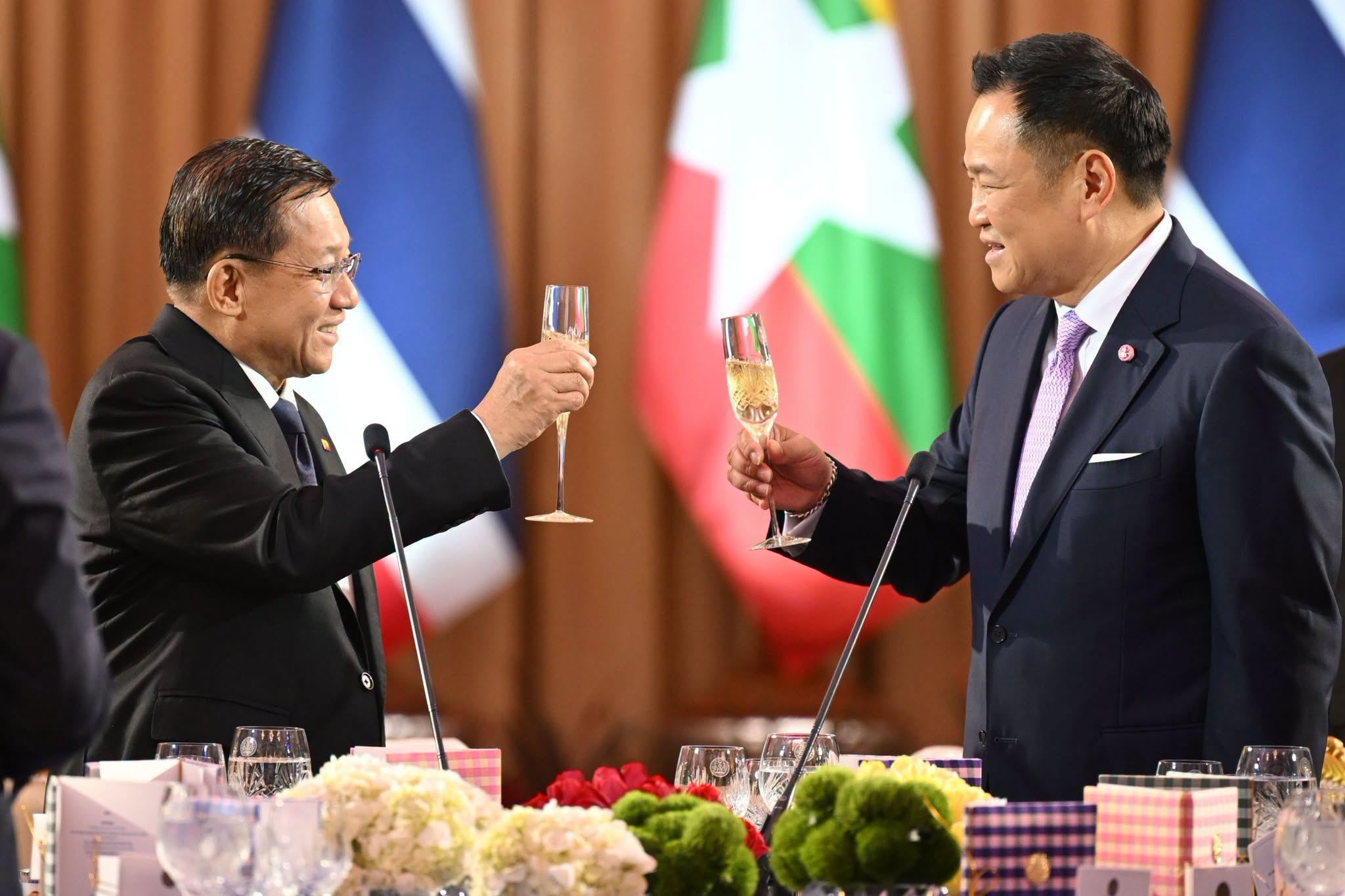
Junta leader Min Aung Hlaing visited Thailand on August 6–7 at the invitation of the Thai prime minister, holding high-level talks at Government House on ASEAN affairs, cross-border security, border trade, energy cooperation, and joint efforts against online scam operations.
A joint statement indicated both sides agreed to consider reopening key border trading posts as security conditions permit. However, analysts note a stark gap between diplomatic agreements and ground realities: the junta has lost control over broad swathes of border territory to Ethnic Armed Organizations (EAOs) and People’s Defence Force (PDF) units.
This territorial shift makes total alignment with the regime strategically impractical for Thailand.
“Ground realities make it impossible for the Thai government to deal exclusively with the military regime,” said U Toe Zaw Latt, secretary of the Independent Press Council Myanmar (IPCM). “Thailand must maintain a careful balance between the junta and border-based ethnic forces. While we may see tighter scrutiny regarding logistical access—such as the movement of weapons, medical supplies, and personnel—Bangkok is unlikely to cut ties with border groups.”
During the summit, Thailand reaffirmed its support for Myanmar’s full participation in ASEAN meetings, while Min Aung Hlaing reiterated his stance of pursuing peace through the National Ceasefire Agreement (NCA) framework. The two nations also signed four Memorandums of Understanding (MoUs) covering labor cooperation and technological exchange, alongside pledges to curb cross-border drug trafficking and telecom fraud.
Despite the high-profile visit, Karenni resistance leaders express confidence that Thailand’s long-standing border policy will remain pragmatic.
“Regardless of who holds power in Naypyidaw, the Thai government has never completely severed ties with EAOs and border communities,” said U Banya, secretary-2 of the Interim Executive Council of Karenni State (IEC). “Thailand’s overarching policy is to engage all stakeholders to protect its own national interests. As long as we understand that stance, there is little reason to anticipate heavy pressure.”
Analysts conclude that Bangkok is likely to preserve its dual-track approach, maintaining working relationships on both sides of the border while adapting its posture as the conflict evolves.