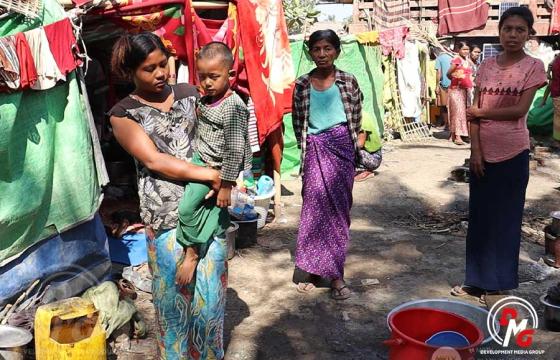

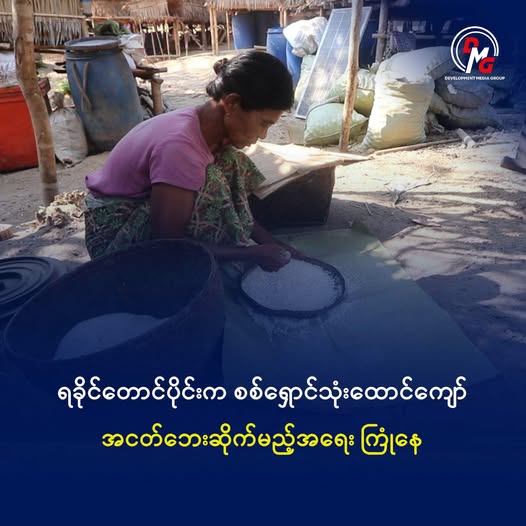
More than 3,000 internally displaced persons (IDPs) across Taungup, Thandwe, and Gwa townships in southern Arakan (Rakhine) State currently face acute food insecurity and worsening living conditions, driven by a severe shortage of humanitarian assistance, according to local aid workers.
Aid providers said relief support has become minimal to almost nonexistent in many areas. A sluggish local economy and the absence of employment opportunities have left displaced families struggling to meet even basic survival needs. As a result, begging has increasingly become a means of coping for some IDPs.
“There are no jobs or income opportunities here, so most IDPs are in a very difficult economic situation. Because families have no income, more and more children are now going out to beg for food. This is happening both in Gwa and Thandwe. If you go to the markets, most of the children begging there are displaced kids,” an aid worker in Thandwe said.
The displaced populations are currently sheltering in forested and mountainous areas, while others are staying with relatives or living in temporary makeshift camps.
Alongside severe food shortages, many IDPs also lack proper shelter and remain exposed to heavy rain and harsh weather conditions, raising urgent concerns ahead of the monsoon season.
“The rainy season is coming, and these IDPs have no money at all, so they cannot even buy tarpaulins or basic roofing materials. They are already struggling just to get enough food. The situation in the south is very different from northern Arakan State—the hardship here is much more severe,” another aid worker from a Thandwe-based relief organization said.
Humanitarian workers have warned that IDPs are already living under extreme hunger conditions, and that the situation could deteriorate further if additional aid does not arrive soon from either local or international sources.
The already dire situation faced by IDPs has been further aggravated by soaring prices of essential food items, deepening the vulnerability of displaced communities that continue to rely heavily on external assistance.
“There are hardly any aid groups operating here—maybe only around three in total. Unlike the northern townships, where there is a wider support network, people here receive very limited assistance. They have no income, and even casual day labour is almost nonexistent. So, when aid groups do manage to reach them, people are extremely relieved and grateful,” a Ramree Township resident assisting IDPs told DMG.
Since the renewed outbreak of conflict in Arakan State in November 2023, around 600,000 people have been displaced, leading to a widespread humanitarian crisis, particularly regarding food security and access to healthcare.
Following the outbreak of fighting, the junta imposed a strict blockade on Arakan State, severely disrupting transportation and supply chains. The move has significantly undermined local livelihoods, and IDPs bear the heaviest burden of the ongoing restrictions.