
In the Inle Lake area of Nyaungshwe Township in southern Shan State, daily carpenter wages have surged to 45,000 MMK, making repairs to some earthquake-damaged homes unaffordable.
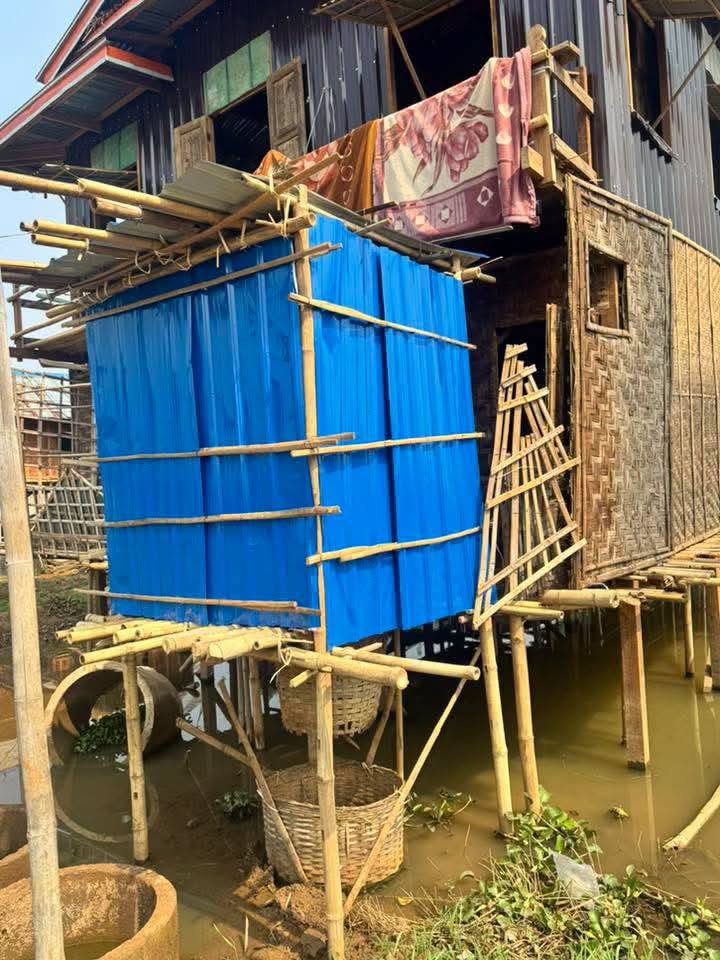
A devastating earthquake that struck central Myanmar on March 28, 2025, also caused extensive damage in the Inle Lake area. Following the earthquake, hundreds of houses were damaged, and some remain unrepaired.
In the Inle Lake area, prices are also rising. The cost of building a bamboo stilt house reaches 5 million MMK, while a dump truck load of soil sells for as much as 300,000 MMK.
“In Inle, building a house has become very difficult to afford. Carpenter wages have risen to as much as 45,000 MMK a day, and a truckload of soil costs around 300,000 MMK. With even daily expenses hard to cover, we simply can’t afford to repair our home,” said an Inle resident.
Although Inle Lake was once a thriving tourist destination known for its natural beauty, many hotels in the area remain closed today due to high repair costs, leaving earthquake damage unrepaired.
In the Inle Lake area, a bag of rice costs up to 160,000 MMK, while motorboat rental can be as low as 50,000 MMK.
Additionally, the lake level has risen by about three inches with the onset of the rainy season, raising concerns among locals that flooding may pose a greater threat as the season progresses.
“Even a small amount of rain can quickly raise the lake water level. This is because sediment at the bottom of the lake has not yet been cleared. When it rains, nearby plantations are often flooded. If flooding occurs again as in previous years, local residents say they are prepared to evacuate,” a local woman told Shan Herald.
In addition, the sharp decline in tourist arrivals to Inle Lake has made life even more difficult for local vendors.
In the Inle Lake area, daily wages for work typically done by women are around 8,000 MMK, while men can earn up to 150,000 MMK per day depending on the type of work.
Since 2022, the Inle Lake area has faced natural disasters every year, including floods, droughts, windstorms, and earthquakes.
After a series of such disasters, many locals are forced to focus on day-to-day survival and livelihoods rather than concentrating on rebuilding efforts.