
The junta's new passport law could threaten and restrict the freedom of movement of former political prisoners, activists for political prisoners' affairs warned.
The law amendment legally creates major obstacles to the rights and prospects of former political prisoners in rebuilding their lives and security, the activists said.
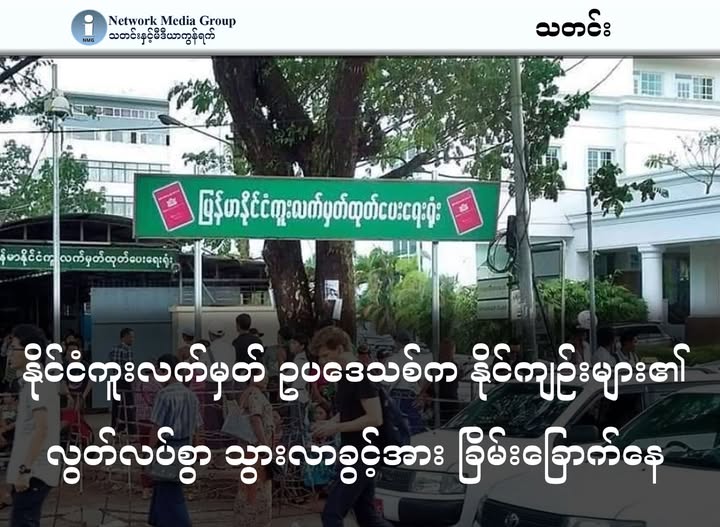
The new law, promulgated on March 17, allows passports to be denied to individuals suspected of jeopardizing state security and interests, those granted amnesty under Section 401(1), and those who have not completed their court-ordered parole.
These restrictions clearly show that the junta is targeting former political prisoners—released either after serving their sentences or through amnesty—and curbing their freedom of movement, the Women's Organization of Political Prisoners (WOPP) pointed out.
“Under this law, the security of former political prisoners is more at risk than ever. Being denied the right to leave the country, those who attempt to flee may have to seek refuge abroad as undocumented migrants, making it far harder for them to feel safe, both mentally and physically,” said Ma Zu Zu May Yun, spokeswoman for the WOPP.
In addition, former prisoners are monitored through the Person Scrutinization and Monitoring System (PSMS) and face difficulties in their social lives and livelihoods because of their past charges.
They had their National Identification Cards (NICs) confiscated when arrested, and now they face yet another blatant violation of their rights with restrictions on applying for passports, Ma Zu Zu May Yun added.
“Former political prisoners have already faced illegal restrictions, but this new law basically makes them legal. Their NICs were confiscated when they were arrested, and many never got them back after release. They were also denied the right to apply for passports. Now, this law formalizes those practices, openly violating their human rights,” she told NMG.
Hta Po, vice chair of the Karenni Political Prisoners Association (KPPA), noted that the new passport law also puts the freedom of movement of political activists at risk.
“The rule letting authorities deny passports to anyone seen as a threat to national interests will have a big impact. Right now, even people who just criticize the junta-run elections are getting arrested. Once someone is labeled a former political prisoner, getting a passport becomes extremely difficult,” he said.
He added that holders of NICs issued to residents of Karenni State, a resistance hotspot, and beginning with 2/xxx often have to go through more stringent checks to obtain passports.
“The junta has already imposed many restrictions on getting passports. For example, people with 2/xxx NICs face much tougher hurdles. So, for Karenni ethnic former political prisoners, obtaining a passport will be nearly impossible,” he explained.
The junta’s new passport law is designed to systematically target opposition political activists, and the WOPP warned former political prisoners on March 26 to prepare for the difficulties and security challenges they could face under these regulations.