

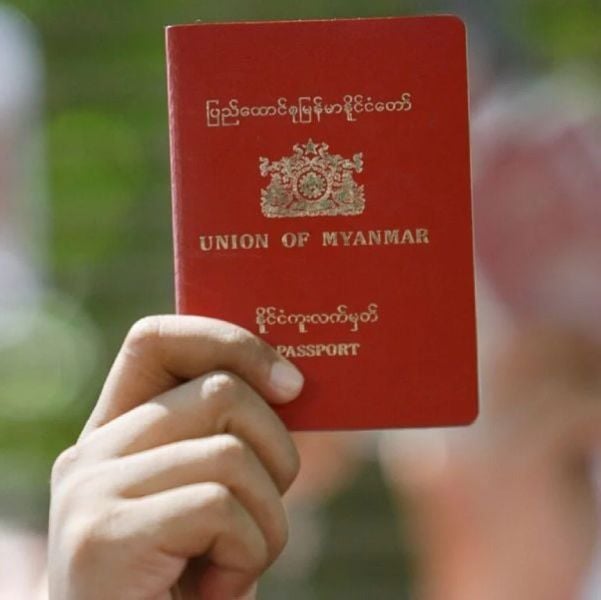
On 17 March, Senior General Min Aung Hlaing, acting in his capacity as head of the National Defence and Security Council (NDSC), signed into law the Myanmar Passport Law (NDSC Law No. 19/2026). The new legislation, which comprises 8 chapters and 47 sections, officially repeals the century-old Myanmar Passport Act of 1920.
The law is framed as a measure to safeguard national security and prevent document forgery, but human rights groups and legal analysts describe it as a strategic tool to suppress dissent.
By codifying broad powers to refuse and revoke passports, the junta has created a legal mechanism to strand political opponents, activists, and participants in the Civil Disobedient Movement (CDM) within the country.
Under the new law, authorities may refuse to issue passports to individuals who cannot provide sufficient proof of eligibility, whose citizenship has been revoked by the junta, who submit fraudulent applications, or who have been convicted of crimes. It also applies to individuals who are subject to court orders or official requests to block passport issuance.
In addition, the junta reserves the right to deny passports to anyone considered a threat to national security or national interests. The law also includes people released conditionally under Section 401(1) of the Criminal Procedure Code who have not completed their required period, individuals currently in detention under court orders, and those deported back to Myanmar for violating foreign laws.
The law further states that if a person is determined to have lost their citizenship, any passport previously issued to them will be revoked.
Individuals who are denied a passport or have their passport cancelled are allowed to appeal the decision to the junta’s Union Minister for Home Affairs within 60 days of receiving notification.
The military authorities also plan to introduce a new electronic passport system with enhanced security features, including embedded chips containing personal data. Once implemented, citizens will need to apply for the new e-passport system, although existing passports will remain valid until their expiration dates.
The law also establishes strict penalties for passport-related offenses. Possessing or using a fake passport can result in a prison sentence ranging from six months to five years, along with fines between 500,000 and 1 million kyats.
Providing false information or documents during the application process may lead to imprisonment for three months to one year, a fine of 500,000 kyats, or both.
Transferring a passport to another person whether by selling, renting, or other means is punishable by three months to one year in prison, along with fines ranging from 300,000 to 500,000 kyats.
More serious offenses such as possessing, using, transferring, or destroying a passport without authorization, or forging and selling counterfeit passports—carry heavier penalties. These include prison sentences of one to five years and fines ranging from 1 million to 1.5 million kyats.