
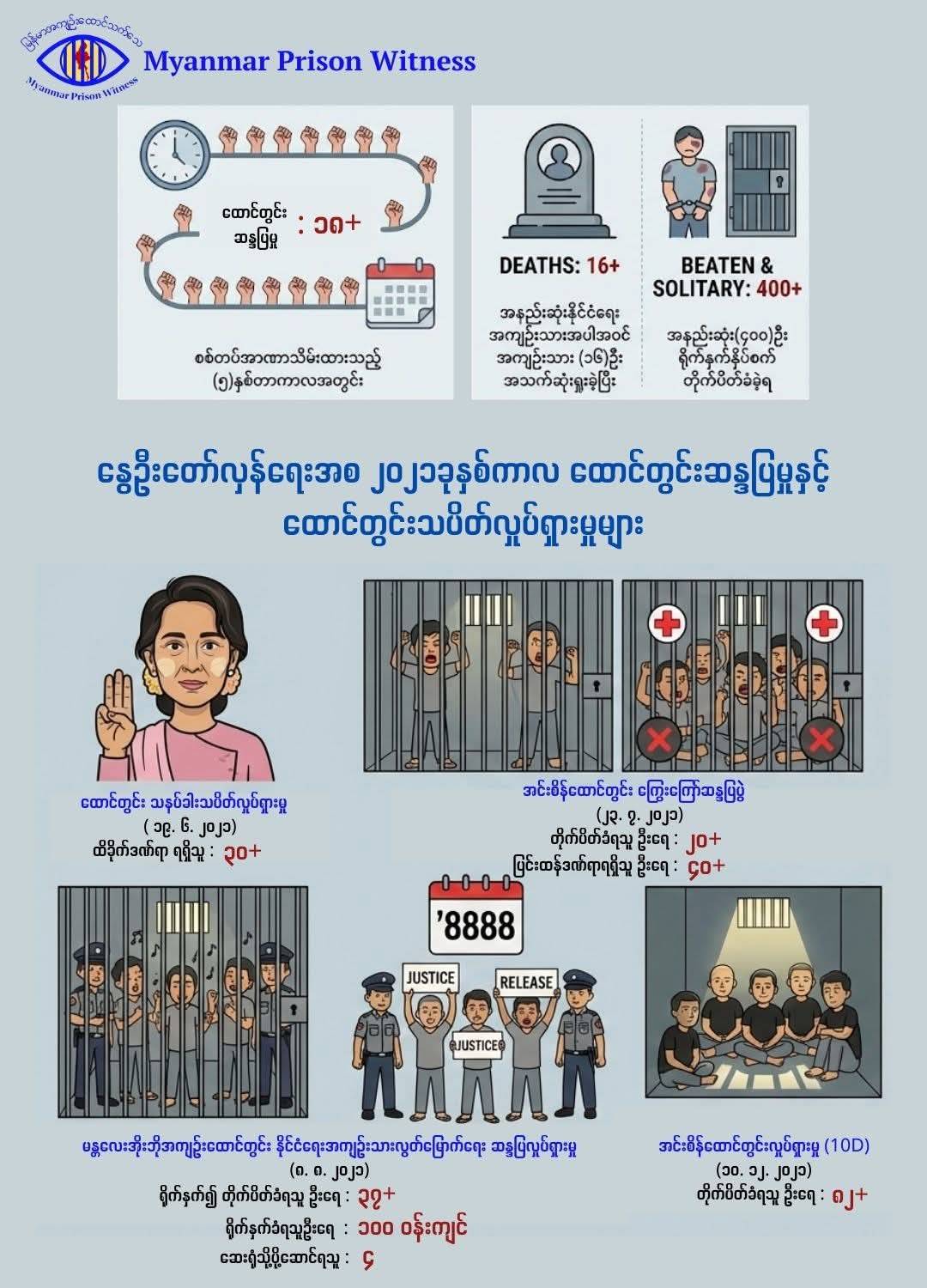
In the five years since the coup, at least 18 major inmate protests have occurred in junta-controlled prisons, with at least 16 inmates including political prisoners have died in custody and more than 400 forcibly placed in solitary confinement, according to Myanmar Prison Witness (MPW).
The figures in the MPW statement on February 16 were compiled based on the information available to the group.
“We’ve received reports that authorities tortured and beat inmates accused of inciting prison riots, with some placed in solitary confinement. We’ve verified all the information available to us and are publishing these findings,” said Ma Suu Nge, an official of the MPW.
After staging the coup in 2021, the junta effectively turned prisons into tools to repress its opponents, while prison authorities willingly carried out actions to please the junta, inmate rights groups said.
In prisons, inmates continue to face abuse, denial of medical treatment, and both mental and physical mistreatment, according to MPW.
The notorious prisons known for the harshest repression after the coup include Insein Prison in Yangon Region and Obo Prison in Mandalay Region.
On June 19, 2021, in honor of the 76th birthday of imprisoned democracy leader Daw Aung San Suu Kyi, political prisoners applied thanaka, a traditional Myanmar cosmetic, to their faces and made the revolutionary three-finger salute.
That same year, a protest movement known as 10D erupted at Insein Prison, where authorities beat more than 80 political prisoners and placed them in solitary confinement.
Additionally, during the Black Shirt Campaign, inmates peacefully protested by wearing black, but prison authorities responded with a brutal crackdown, placing 79 political prisoners in solitary confinement.
MPW said it has vowed to continue raising awareness among the public and the international community about human rights violations in prisons, including torture and the lack of access to medical care for inmates.
Between the day of the coup and February 13, 2026, the junta arrested 30,463 people, with 22,769 still in detention, according to the Assistance Association for Political Prisoners (AAPP).