
Farmers in Pinlaung Township, within the Pa'O Self-Administered Zone in southern Shan State, are trapped in debt and struggling under severe economic hardship, local warehouse operators said.
Armed conflicts in Pinlaung Township have disrupted transportation networks and destroyed crop markets, while armed groups have imposed heavy taxes on farmers, plunging them into a deep debt trap.
With crop markets still struggling to recover, farmers are unable to repay their loans, accumulating higher interest and sinking further into debt.
“Traders often pay farmers in advance, even before the crops are planted. But if the crops fail or can’t be harvested, farmers end up in debt. Some traders understand this and are willing to delay payments, but farmers who have to deal with those without such a forgiving nature get pushed into serious trouble. Right now, there isn’t a single farmer who is debt-free,” said a farmer from Tikyit Village, Pinlaung Township.
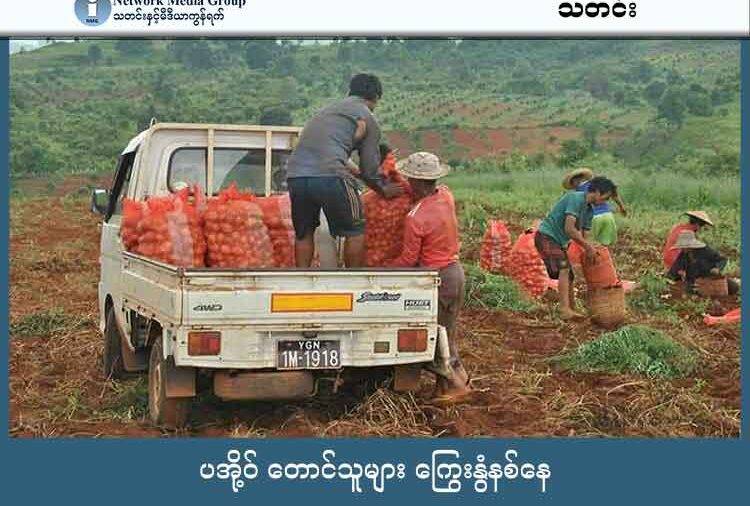
In 2025, farmers are facing losses due to disrupted transportation, lost export opportunities, and shortages of technology and pesticides. Even when selling their crops in the domestic market, they often fail to get the prices they expect.
On top of that, the Pa-O National Organisation, a junta-aligned militia group, has imposed heavy taxes on local farmers, worsening their already dire situation.
The PNO charges farmers so-called ‘security fees’ twice a year, at a rate of 40,000 MMK per day.
In addition, the PNO frequently demands extra payments under various pretexts such as vehicle taxes, conscription fees, and military expenses, causing severe hardship for farmers.
“Last year, many farmers didn’t even have the money to plant rice. They couldn’t afford the rainy-season crops. But the PNO didn’t care about their problems, it just kept extorting money from local farmers. And it’s not just the farmers, plantation owners face the same kind of pressure. The PNO even taxes tractors. Some plantation owners have had to sell their land to pay off debts, only to end up working as laborers on other plantations,” a warehouse owner in Pinlaung Township explained.
Since 2023, the junta has stopped providing loans to farmers, forcing them to turn to outside sources with higher interest rates, as they had no other choice.
As interest rates soared and debts piled up, many farmers were forced to sell their farmlands and orchards at a discount to repay what they owed. Some even had to part with the jewelry they had saved their whole lives.
In some villages, farmers can no longer rely on farming to repay their debts, so they are leaving for other towns, cities, or even overseas in search of work, leaving behind mostly elderly people and women.