
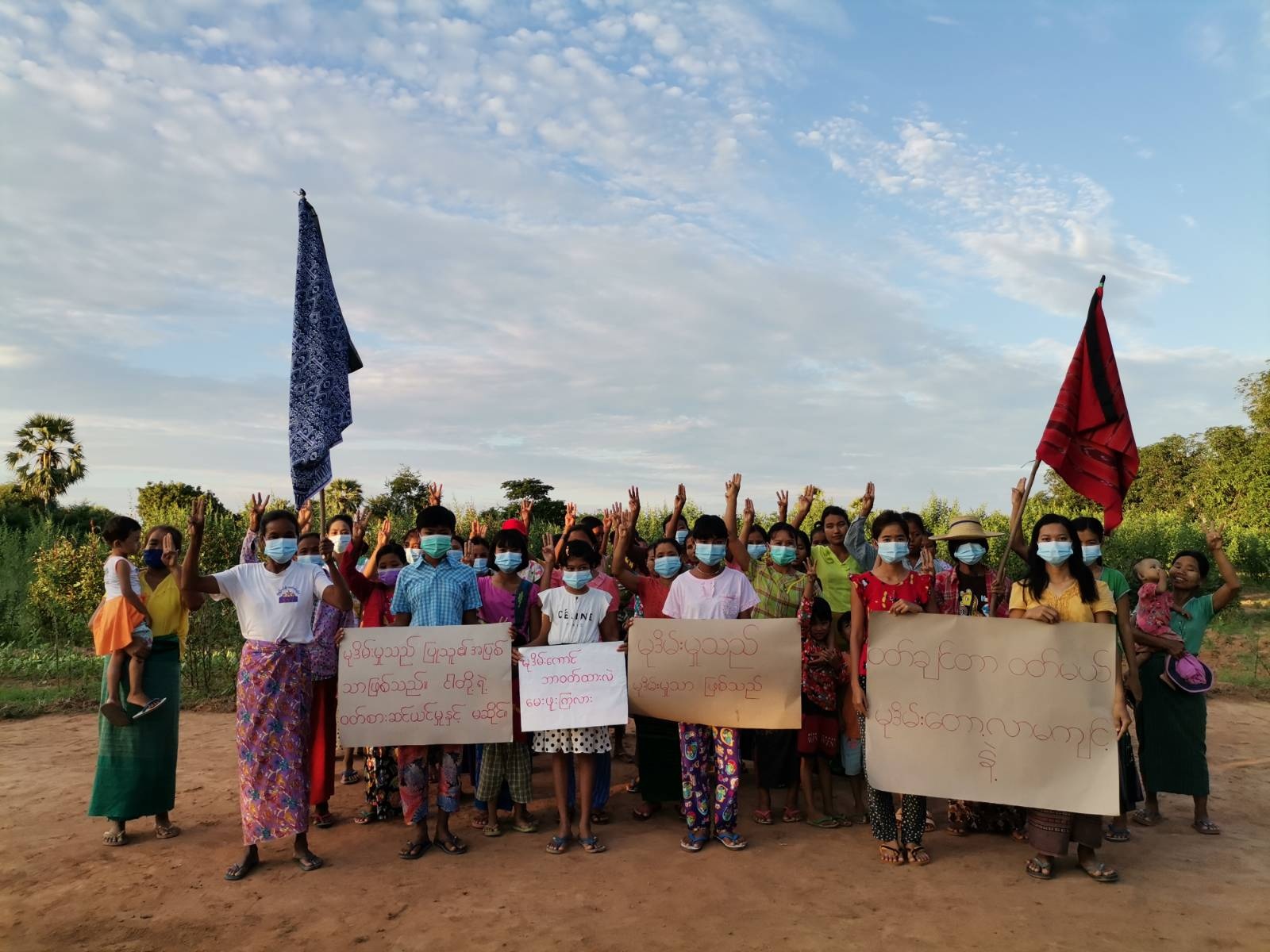
Women’s organizations have warned that conflict-related sexual violence is increasingly prevalent in Myanmar.
Since the 2021 coup, legal protections for women have deteriorated, contributing to an increase in conflict-related sexual violence.
On October 10, the Burmese Women’s Union (BWU) reported that in September 2025 alone, one woman was killed and 15 others were injured in incidents of conflict-related sexual violence.
In areas where the junta’s control is weak and the administrative system is failing, serious incidents of sexual violence, some resulting in the deaths of women, are occurring, according to Maw Hpray Myar, chairperson of the Karenni National Women’s Organization (KNWO).
“During the current conflict, even if it’s not the junta directly, other groups linked to it, sometimes in civilian clothes, have become increasingly bold in committing sexual assault, violence, and gang rape against women,” she said.
She pointed out that when some individuals take up arms, their darker instincts emerge, driving them to bully and exploit the vulnerable, which often escalates into cases of sexual violence.
Women’s organizations noted that during the conflict, various human rights violations have risen, severely undermining the mental and physical security of the population, particularly women and girls.
Victims of sexual violence know where to report, but because the police are controlled by the junta, they fear retaliation from the perpetrators, which could put them in even greater danger.
“The current situation offers very little protection. So, if complainants feel unsafe, they don’t dare to come forward,” Maw Hpray Myar said.
If the perpetrator is powerful or holds a high-ranking position, the victim often faces intensified humiliation and threats, which leads many to decide not to report what happened. Maw Hpray Myar emphasized that regardless of a perpetrator’s background, institution, or rank, collective efforts are needed to ensure justice for their actions.
Maw Hpray Myar said that whenever resistance forces draft military codes of conduct, women’s organizations often advocate for the inclusion of regulations and provisions that protect women.
“To put an end to conflict-related sexual violence, everyone needs to understand the basics of these incidents and how they can be prevented,” she said.
Following the coup, not only did incidents of sexual violence against women rise, but some cases also resulted in deaths due to the junta’s various human rights violations.
The BWU alleged that in September, 47 women including pregnant women and young girls were killed and 57 others injured due to human rights violations by the junta.