
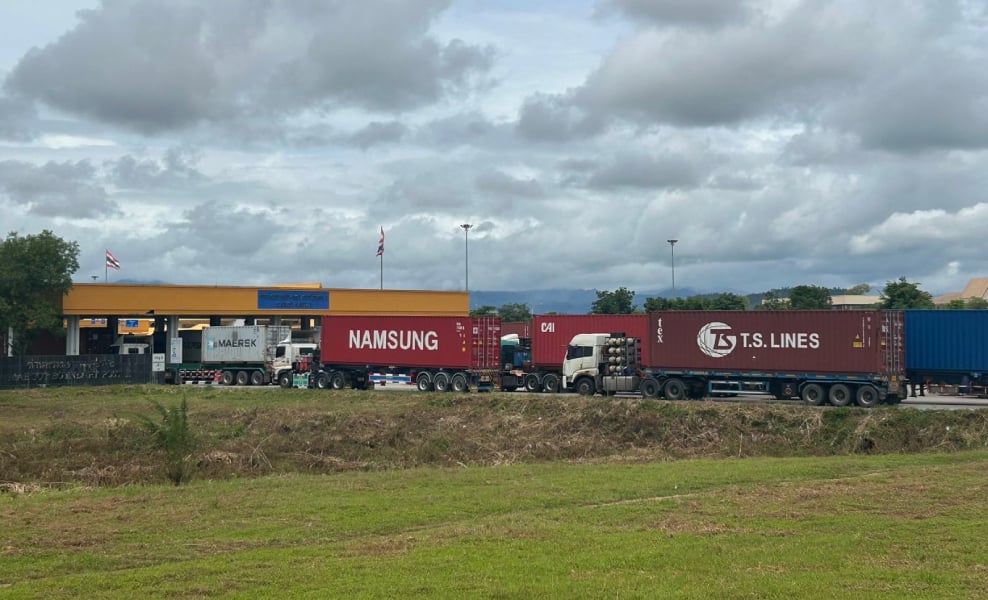
Traders have warned that goods stranded on the Thai side of the Mae Sot–Myawaddy Friendship Bridge No. 2 risk confiscation and auction by Thai authorities as import permits approach expiry.
Most permits are set to expire in the first week of September, with the rest following in the second week. Under Thai law, goods can remain only one month before being seized and auctioned by the government, forcing traders to buy them back.
Truckloads of goods bound for Myanmar have been stuck in Mae Sot since early August, after the junta closed the Myawaddy border crossing on 18 August. The closure, ordered from Naypyidaw, was justified on the grounds of cracking down on illegal border trade and foreign currency use.
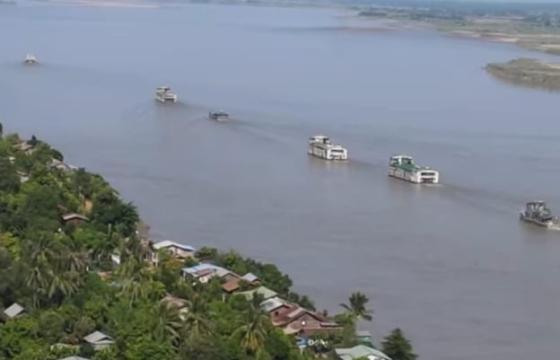
Traders say transport costs have surged, while some goods are being unloaded and ferried across the Thaung Yin River by boat. But imports moved this way are restricted to Myawaddy and cannot travel further inland.
“Most of the goods are unlicensed, so they can only be moved up to Myawaddy. Even after arriving there, they cannot go further,” one trader said.
Reports suggest the junta may allow stranded goods to be rerouted through the Mae Sai–Tachileik route or the Ranong–Kawthaung waterway. However, traders complain that licenses are being granted only to junta-linked businesses, with applicants required to prove foreign export earnings.
The junta has also tightened restrictions elsewhere. From the third week of August, large-volume imports of Thai goods by air were banned. Meanwhile, fighting along the Asia Highway — a key trade artery controlled in parts by ethnic armed groups — has driven up customs fees at both rebel and junta checkpoints, including along Htoe Kaw Koe Road and Highway 1018.
The disruptions are already being felt nationwide. Retailers report sharp price hikes for Thai consumer goods such as noodles, soap, shampoo and skincare products.
“Prices have jumped by about 5,000 to 6,000 kyats on average. Some shops have stopped selling because the cost of restocking is higher than what they can charge customers. Our goods are still stuck,” said one retailer in Myawaddy.
Shortages and soaring prices of Thai imports are now spreading across Myanmar, adding pressure to traders, small businesses, and households reliant on cross-border consumer goods.