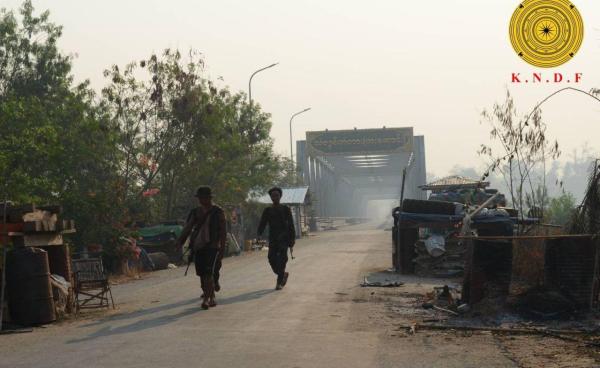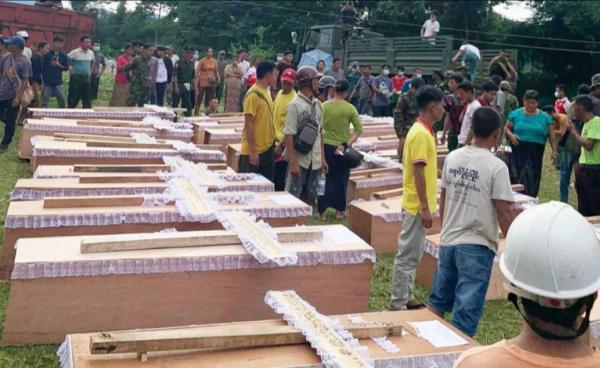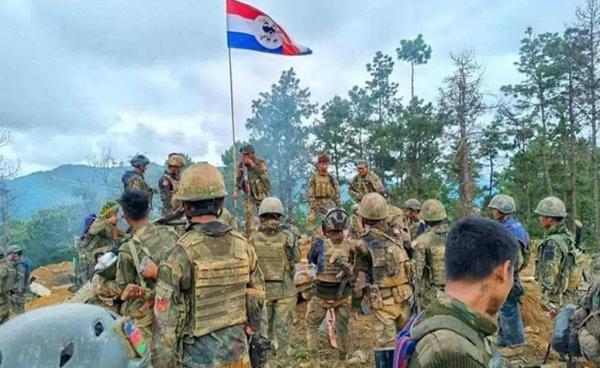
Burma Campaign UK, a human rights advocacy group, has urged the European Union to refrain from lifting further sanctions on Burma citing the deteriorating situation in Shan State.
Feature Section
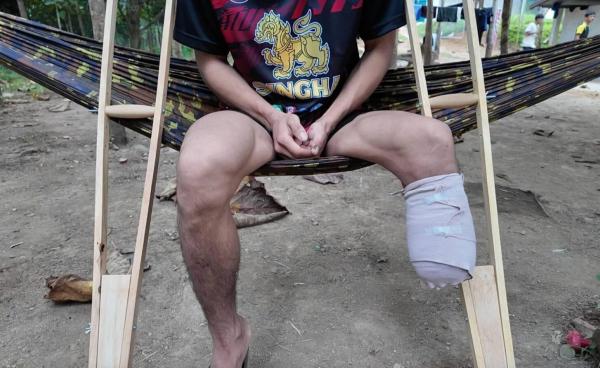
Despite losing his legs Saw LahKyi soldiers on
Karen News photojournalist Saw Mort spent time with landmine casualty Saw LahKyi, a Karen National Liberation Army soldier, who lost both legs when he stepped on a mine in 2009.
Border boomtown: A tale of winners and losers
Between Thailand and Myanmar, the town of Mae Sot is experiencing rapid economic growth. But the story of success is a double-edged sword, with migrant workers struggling to live, even as the town gets richer.
Padoh Mahn Sha’s dream, lives on
Speaking on the 5th anniversary of the assassination of Karen National Union leader, Padoh Mahn Sha Lah Phan, his four children thanked people world wide for their continued support of their father’s principles and their condolences.
KNU leader: 2008 Constitution does not benefit ethnic people
KNU General Secretary, Padoh Kwe Htoo, in an exclusive interview with Karen News stressed that the KNU remains committed to peace, but warns Burma’s government to enact further reforms.
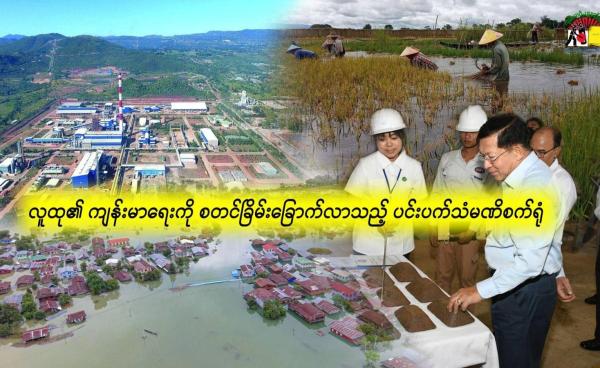
Thilawa farmers face losing rice fields to SEZ
“Two weeks to abandon your rice paddies or face a month in prison.”
The deadly side of development: Klity Village, A cautionary tale
The ongoing legacy of deadly mine run-off for a small town in Thailand could be repeated en masse in Burma, where mining companies have little to no oversight and environmental laws are more lax than
Thailand.
A new generation of Burmese-Chinese
A December afternoon in Rangoon is still as hot as the summertime. Under the scorching sun, overloaded buses running along 16th Street in Chinatown look like they’re on their last legs. Small pinwheels spin lazily on the overhanging balconies.
The truth behind the Chinese tourism boom
In 2011, Chinese tourists overtook Thais as the leading nationality visiting Burma with, officially, 65,838 visitors. But if you walk around the famous attractions in Rangoon such as Shwedagon Pagoda, you will hardly find any tour groups from China or even an individual Chinese traveler. So where are they?
Night and Day in Chinatown
The Burmese call it “Tayote Tan,” and it is located in downtown Rangoon, west of the Sule Pagoda. This bustling exciting neighborhood lies in a square bordered by Shwe Daung Dan Street to the west and Shwe Dagon Pagoda Road to the east, Maha Bandoola Road to the north and Strand Road to the south. Occupying about a fifth of the city’s downtown area and packed with some 150,000 people, Chinatown is part of Rangoon’s core and a must-see attraction for tourists.
The old underworld
“I was having my morning tea when they barged in, swinging iron bars and smashing everything in the teashop,” said Zhao Zhenheng, the Secretary of the Hung Mun Ghee Kung Tong of Burma, a secret society descended from the “Tiandihui”, also known as the “Chinese Freemasons” or “Hung Mun”, an international organization originally established back in Qing Dynasty China as an all-men fraternity promoting Chinese values, customs and the ideals of democracy. He was recalling how Rangoon’s Chinatown used to be many years ago.
The old man, now in the autumn of his life, was at the time a little boy during the British rule of the 1930s. He is a Chinese-Burmese, born in northern Burma to parents who were immigrants from Guangdong. He lived almost his entire life in Rangoon.
In Zhao’s childhood memories, the old Chinatown was a combination of opium dens, brothels and gambling houses. Gangs were everywhere; triads rampaged. The jumbled communities and clan associations frequently fought for territory.
“There were two major factions, the Jian De and He Sheng,” said Zhao. “He Sheng is a lodge descended from the Hung Mun which aimed to overthrow the Qing Dynasty while Jian De regards themselves as adherents of the Qing Dynasty. So they could not stop fighting with each other within Chinatown.”
The groups were strictly and spatially divided. The headquarters of the Jian De was on Bo Ywe Road while He Sheng based themselves on 24th Street. Blood and death were always lurking in shadows.
Besides the disputes inside the Hung Mun, there were also regional conflicts and political differences among the associations and communities. The Hokkien lived along Strand Road while the Cantonese congregated along Maha Bandoola Road. Some of them were pro-communist “Reds” while the supporters of the Kuomintang were the “Whites”.
The battles lasted for decades—until a military coup by Gen. Ne Win in 1962.
“Everything turned underground,” said Zhao. “And then faded out.”
Nationalization policies in 1966 and furious anti-Chinese riots in Rangoon in 1967 compelled tens and thousands of Chinese and Chinese descendents to leave Burma. All Chinese community activities, schools and newspapers were banned.
“You could not see a single Chinese language sign or billboard in Chinatown. Many Chinese were afraid to admit their nationality,” said Zhao. “The Chinese-Burmese only talked in Burmese.”
But a shared anguish can be a bridge of reconciliation.
The Jian De and He Sheng—foes for so many generations—gradually made peace with each other during the era of the military junta. In the last 10 years, many have deepened their business cooperation, especially among the younger generation.
“They now sit down to drink tea together,” smiled Zhao. “The young generation thinks it’s pointless to keep on fighting. Teamwork is more important.”
When the former military junta finally ceded power to Thein Sein’s nominally civilian government, the Chinese communities and clan associations resurfaced like bamboo shoots after a spring rain. These communities are typically represented by consanguinity, regional networking and industry connections. The gangs of the olden days have evolved into a political party called the Ghee Kung Tong of Burma, mainly functioning as business associations and charity groups.
“He Sheng is now a party. We mainly engage in philanthropy to help our members,” said Huang Quan Xiang, the vice-chairman of He Sheng Corporation.
Among the estimated 100 communities are the big four: the Jian De Association now located on Latha Street; the He Sheng Corporation on 24th Street; the pro- communist Myanmar Chinese Chamber of Commerce on Pagoda Road; and the pro-Kuomintang Myanmar Overseas Young Chinese League which can be found on Shwe Taung Dan Street.
“Now there is no separation of Reds and Whites,” said Zhao. “They just help each other, creating more business and better charity.”
When night falls
The appearance of Chinatown at night is much different from during the day. As the last rays of light fade from the sky, Chinatown transforms like a beautiful woman lifting her veil. The vibrant street-life positively throngs with food stalls and fruit vendors. The Chinese restaurants on 19th Street, known as “Myanmar Lan Kwai Fong”, suddenly all turn into barbecue bars, serving skewered meats, vegetables, steaming dishes and cold beers. Customers can enjoy Chinese-Burmese style cuisine, accompanied by singers with guitars long into the wee hours.
This is the only night market (sometimes referred to as Sekhantha Night Market) in Rangoon. The market never closes, they say, even during the curfew of the Saffron Revolution.
A fading culture?
“There are great changes in Chinatown,” said Huang Wenzhang, a veteran teacher at Myanmar Confucius School who has been teaching Mandarin for almost 30 years. “The most significant change is that Chinatown is no longer an exclusive zone for Chinese.”
Burmese poured into Chinatown after the nationalization (anti-Chinese) riots in Rangoon in the late 1960s—spurred by fears that Chinese were about to “import” the Cultural Revolution—that left hundreds of Chinese dead and caused hundreds of thousands to flee Burma.
“All Chinese schools were closed. All Chinese newspapers were shut down”, said Huang, who said her primary school principal was killed in the riots. “The Chinese-Burmese were afraid of being recognized as Chinese. The young generation stopped learning their language. They Burmanized.”
Now local Burmese and pockets of Indians can be founded across Chinatown. Following China’s style of business acumen, they too have started up businesses in this quarter.
“There were never any Chinese signs around the streets, not until recent years,” said Huang.
There are two major temples in Rangoon’s Chinatown, the Cantonese Guan Ying temple and the Hokkien Keng Hock Keong. They are traditional venues for major Chinese festivals and religious celebrations. The two temples provide elderly Chinese (over 70 years of age) and the unemployed with a monthly subsidy of roughly $8, and some bonus “lucky money” at spring festivals.
But although the Chinese here were once tightly bound by blood, business and religion, the same cannot be said today. As more and more Chinese become wealthy they move away from rambling Chinatown to new modern suburbs. Chinatown’s cohesion is simply not as powerful as before.
Nowadays Chinatown is full of people dressed in traditional Burmese longyi, drinking tea and chatting with Burmese. You can hardly tell who are Burmese, who are Chinese and who are mixed.
It is not unusual to find younger Chinese unable to speak a Chinese language, unlike their parents and grandparents.
“The young [Chinese] people today are not interested in learning their native language or joining these outdated organizations,” said Li Piaoxing, the Chief Secretary of the Myanmar Overseas Young Chinese League, a pro-Kuomintang organization with ties to Taiwan.
“We are worried about the destiny of the old Chinese societies. They may wither away in 10 years,” said Li, pointing out that the membership of their group is now less than 100.
“And we also worry about our children’s future,” said Li. “No language, no nation.”
Page 1 of 27